On the Rocks: Meteora

Tags

, ,

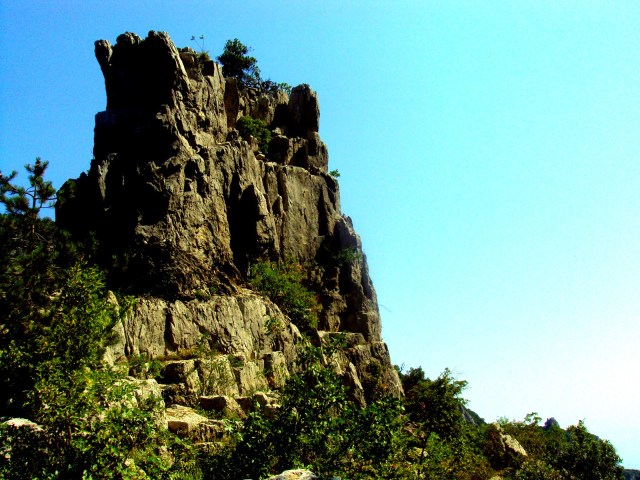
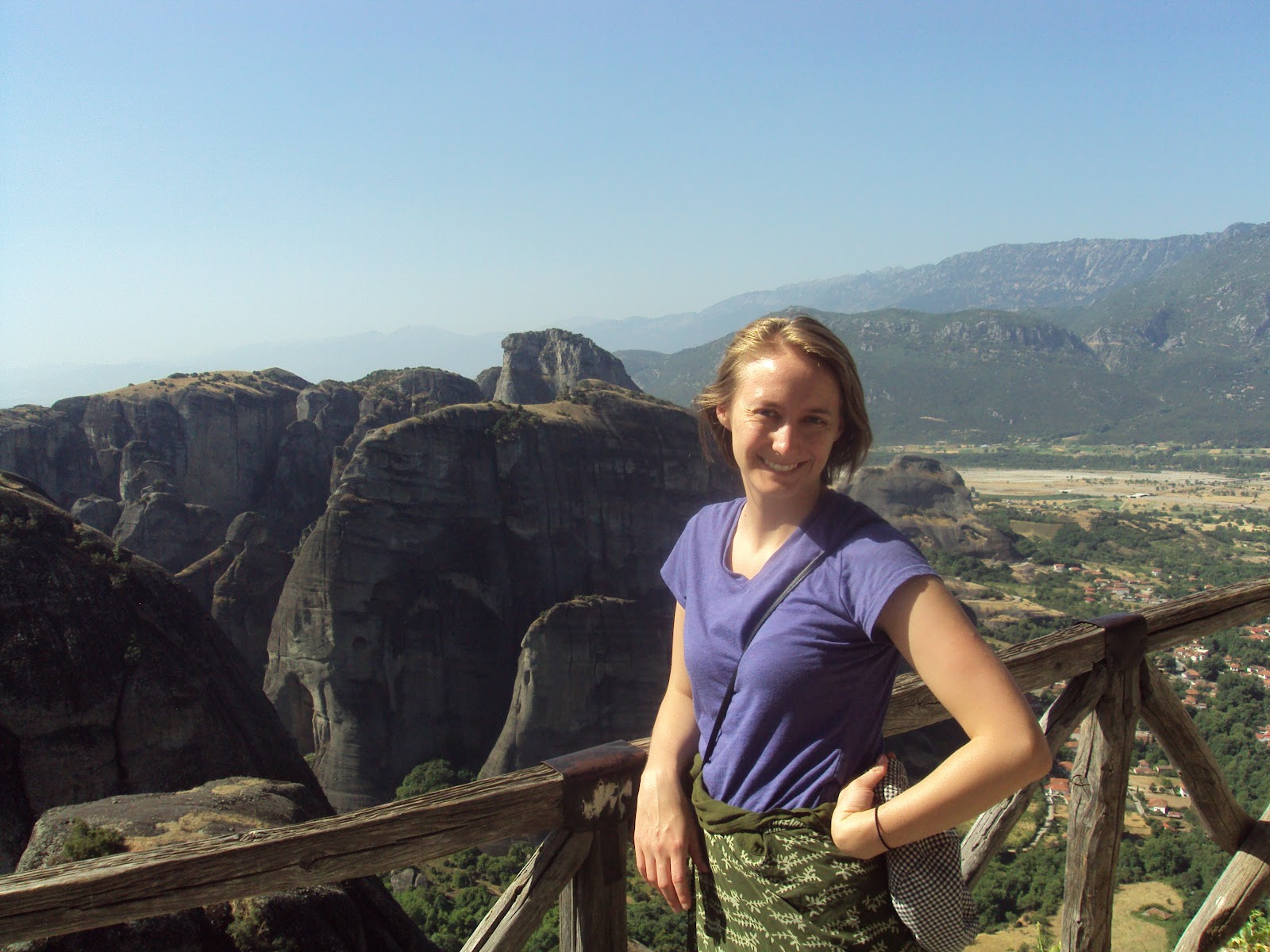
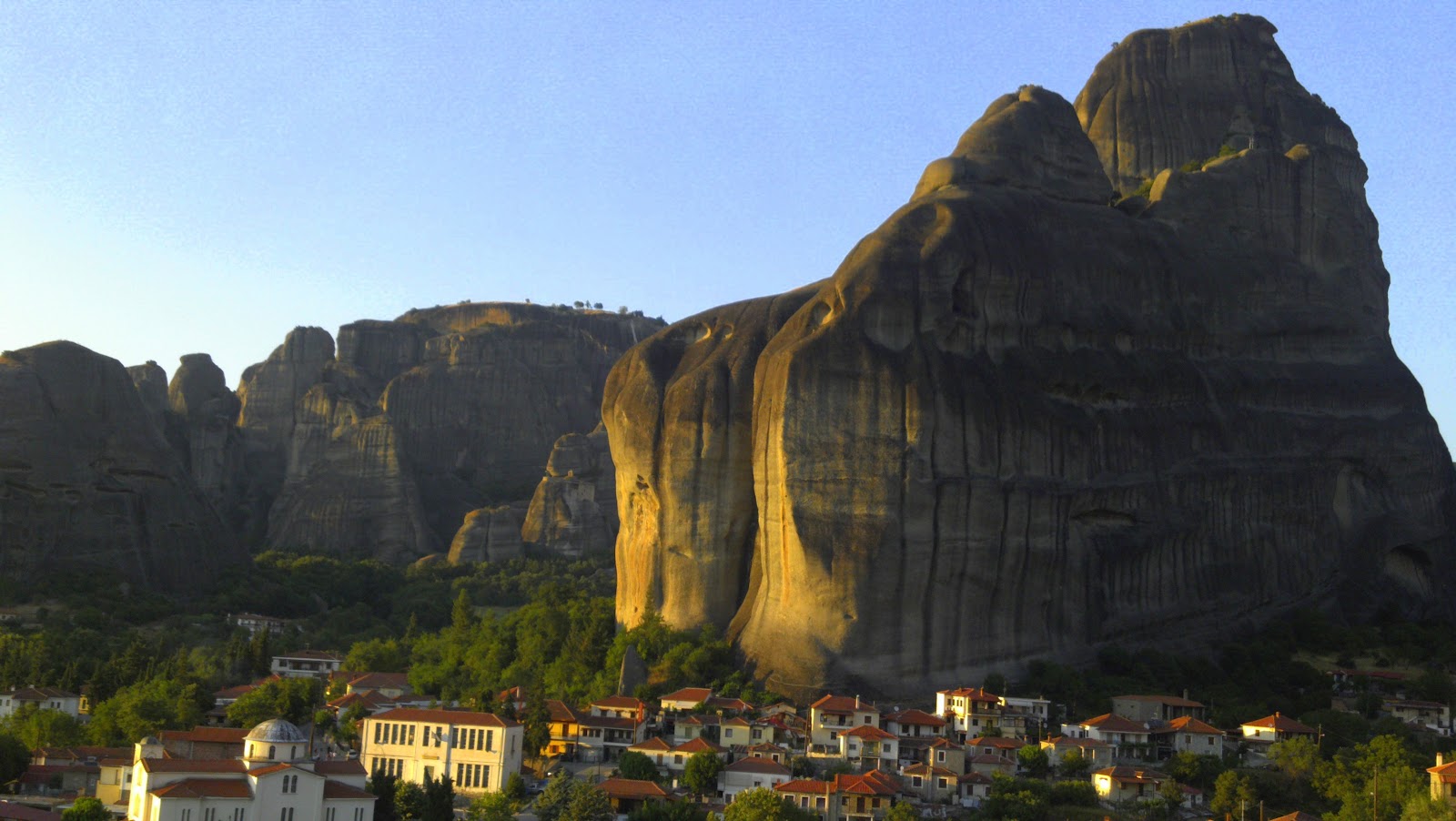
Our penultimate stop on our route was Kastraki, at the foot of Meteora, a place where geology and time have crafted a landscape both beautiful and alien. “Meteora” means “suspended in air,” and it’s no wonder why it kept this name. Scientists have only theorized as to how these gargantuan rocks formed to reach almost 400 meters high, but the main idea is that about 60 million years ago, a combination of earthquakes and weathering made them what they are today. Atop these outcroppings are Greek Orthodox monasteries that still house monks. 
 

We spent a lot of time trying to avoid the heat—it was about 105 F all the days we were there, and although we’re used to the high temperatures in AZ, we felt the effects of the sun. Normally, we would have hiked to the monasteries, which is doable and much less intimidating than what we had just done a couple days prior on Olympus (although we both were still sore from that happy little jaunt, as well). 
One day we did manage to catch a bus up to the monasteries. Snaking up the mountain on the bus, the view shifted and our perspectives morphed. What had once been little toy houses perched on the rock crag transformed into life-size buildings, and we disembarked at the Holy Monastery of Grand Meteoron.
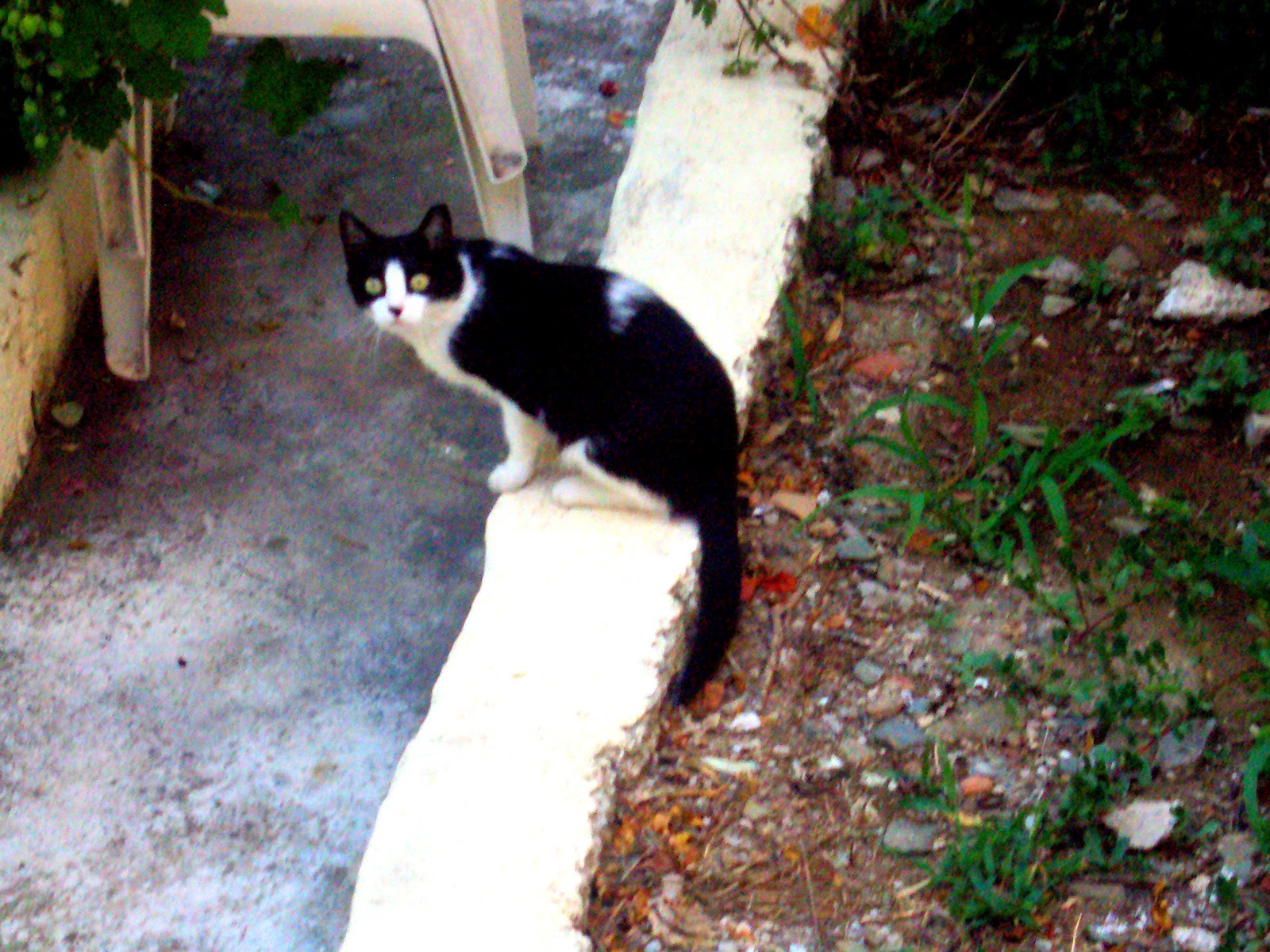
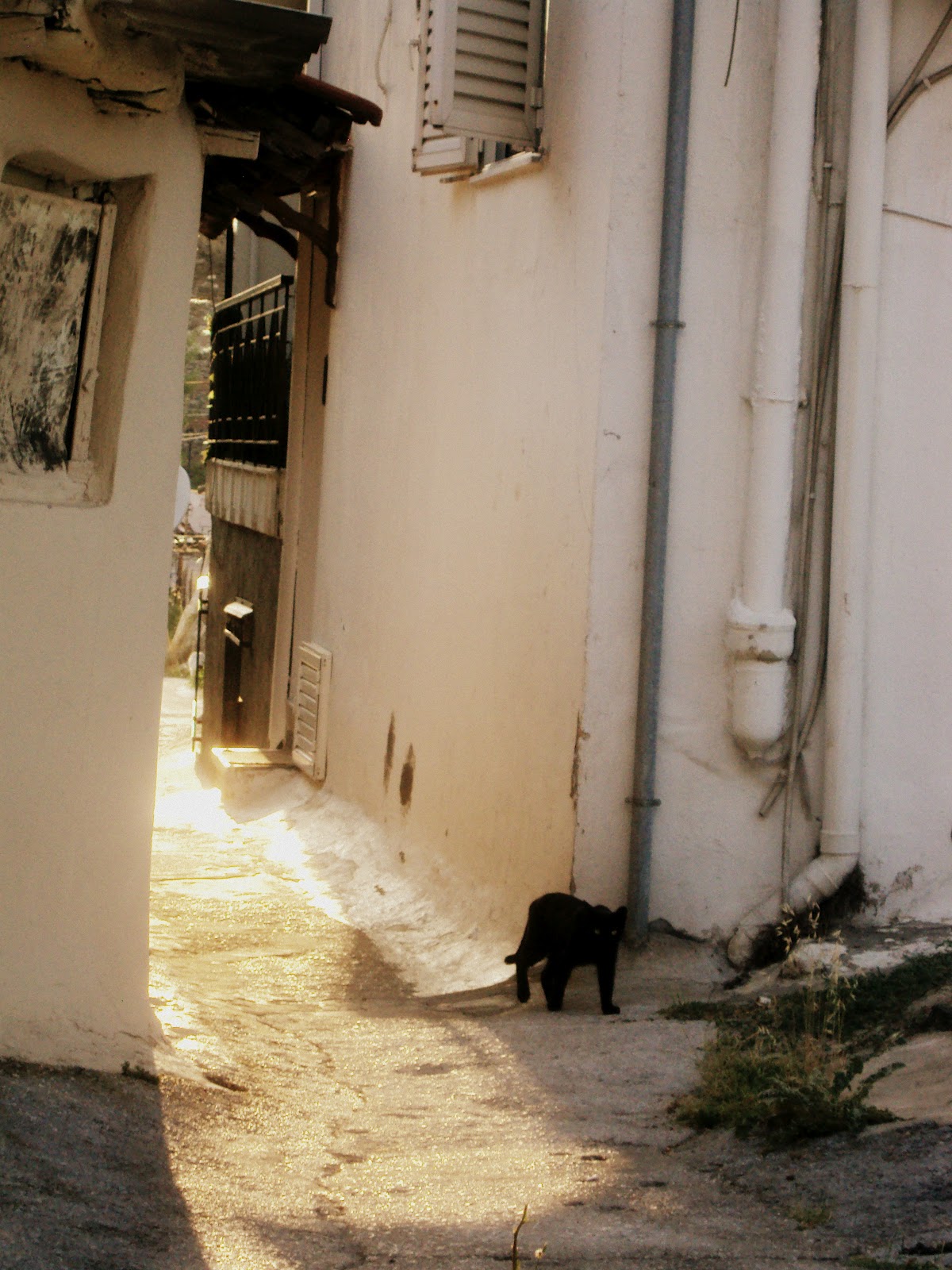
This particular monastery is the biggest of the six, and was established in 1340. Among things to see at the monastery, other than the requisite Grecian kitty, are museums both about the religion and their documents, artwork, and Greek history, as well as the old kitchen, workshops and the ossuary, where all the bones of deceased monks remain today.
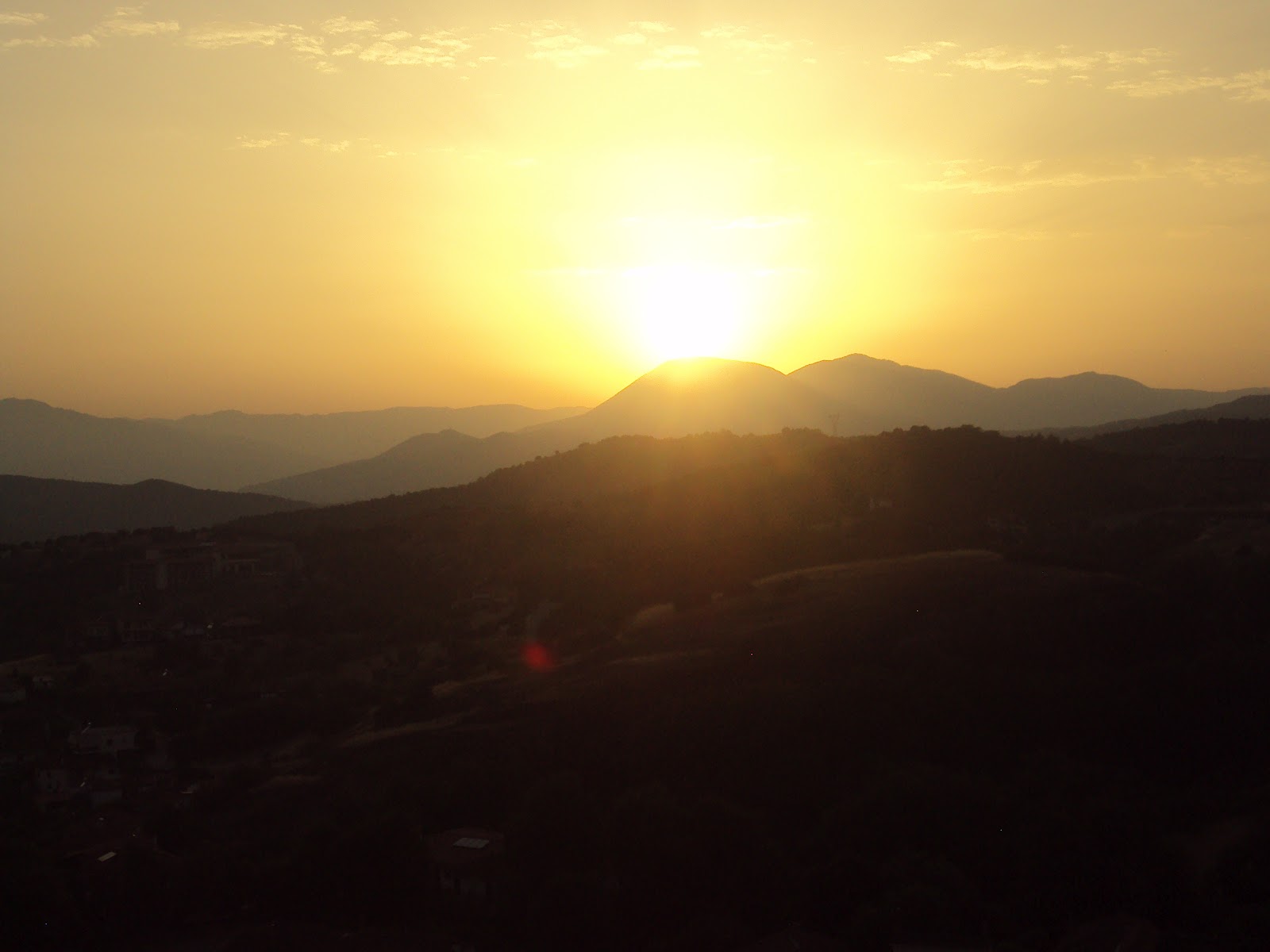
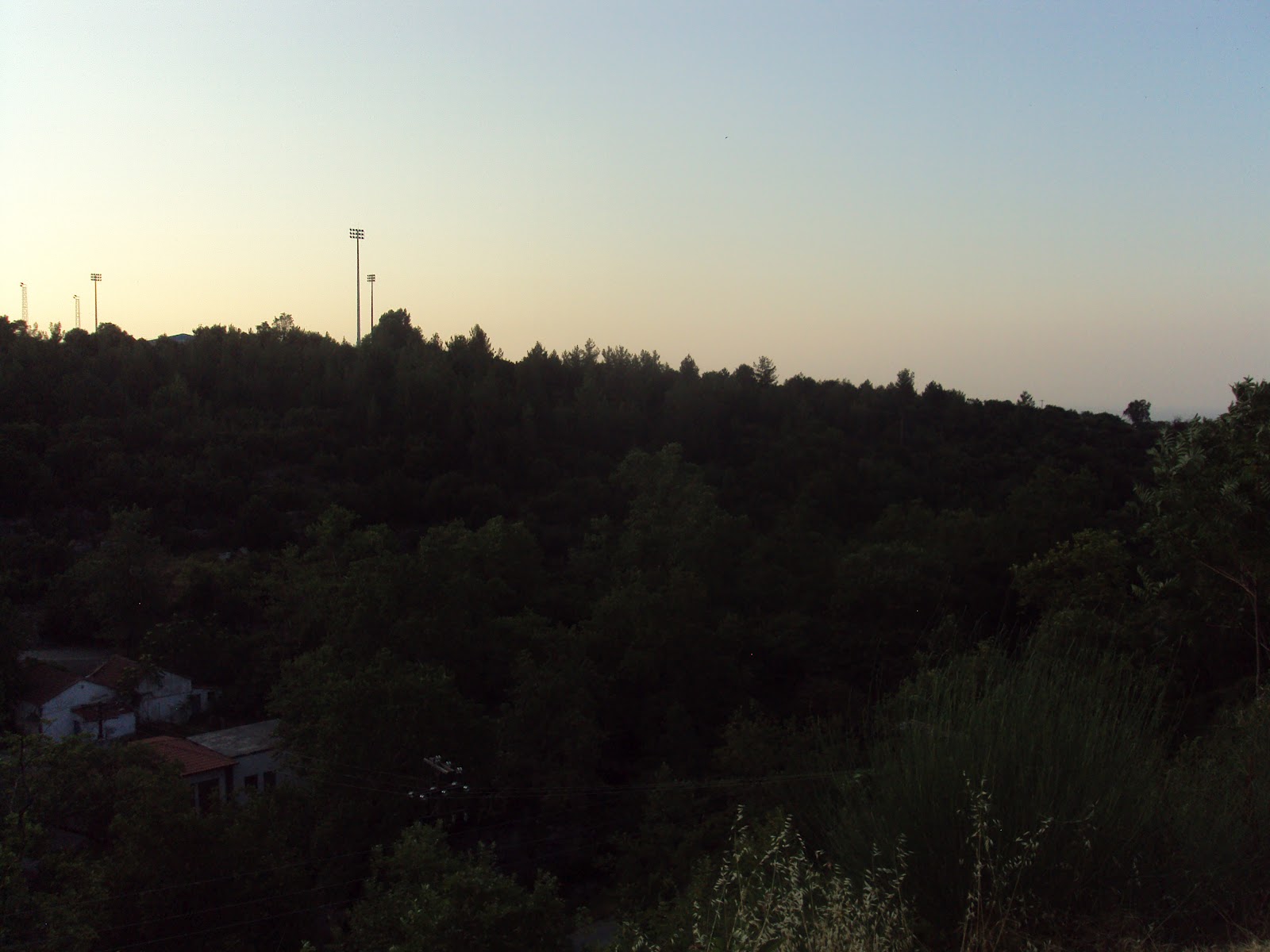
More than anything, though, are the incredible views, both from the monasteries and below. Other than seeing the monasteries on the rocks, my favorite thing to do was watch the sunset from the road. Note to self: watch more sunsets. 

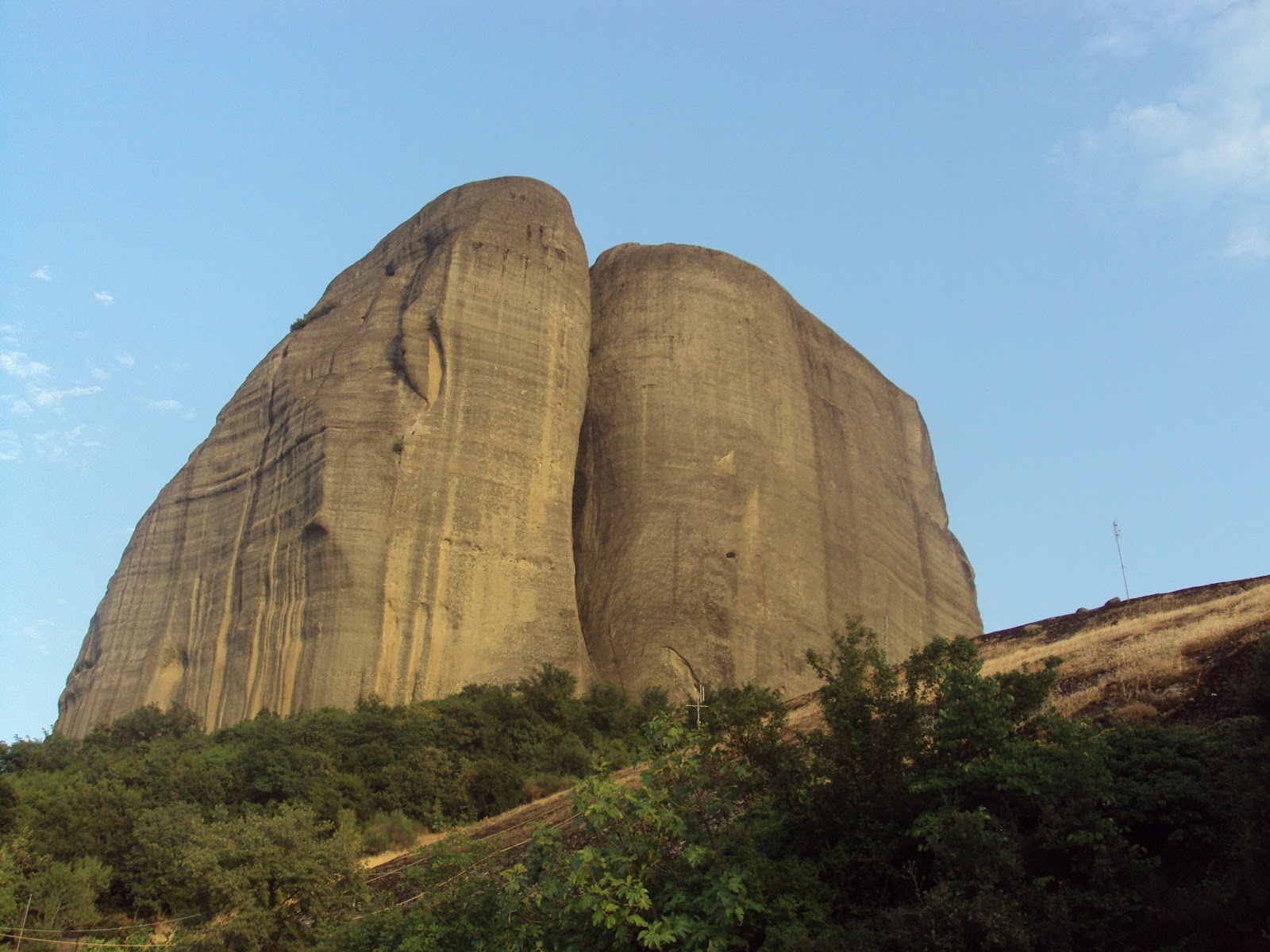
A big rock

Sunset from our favorite spot. There were benches facing the exact right point, and an old man always came to watch the sun go down, too.

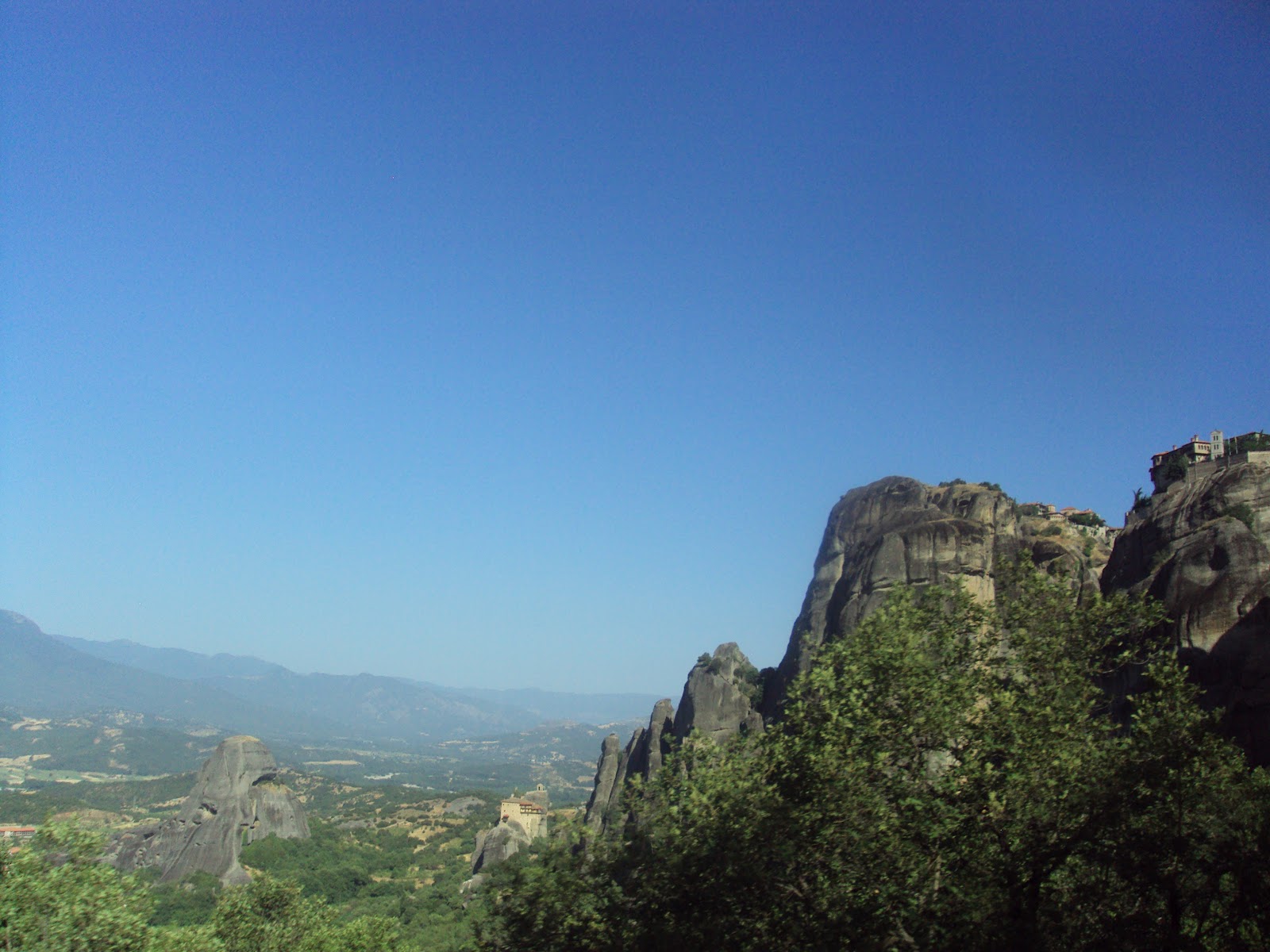
On the road up to the biggest monastery. You can sort of see on the right where another one rests.

More rocks!

Thar she blows!

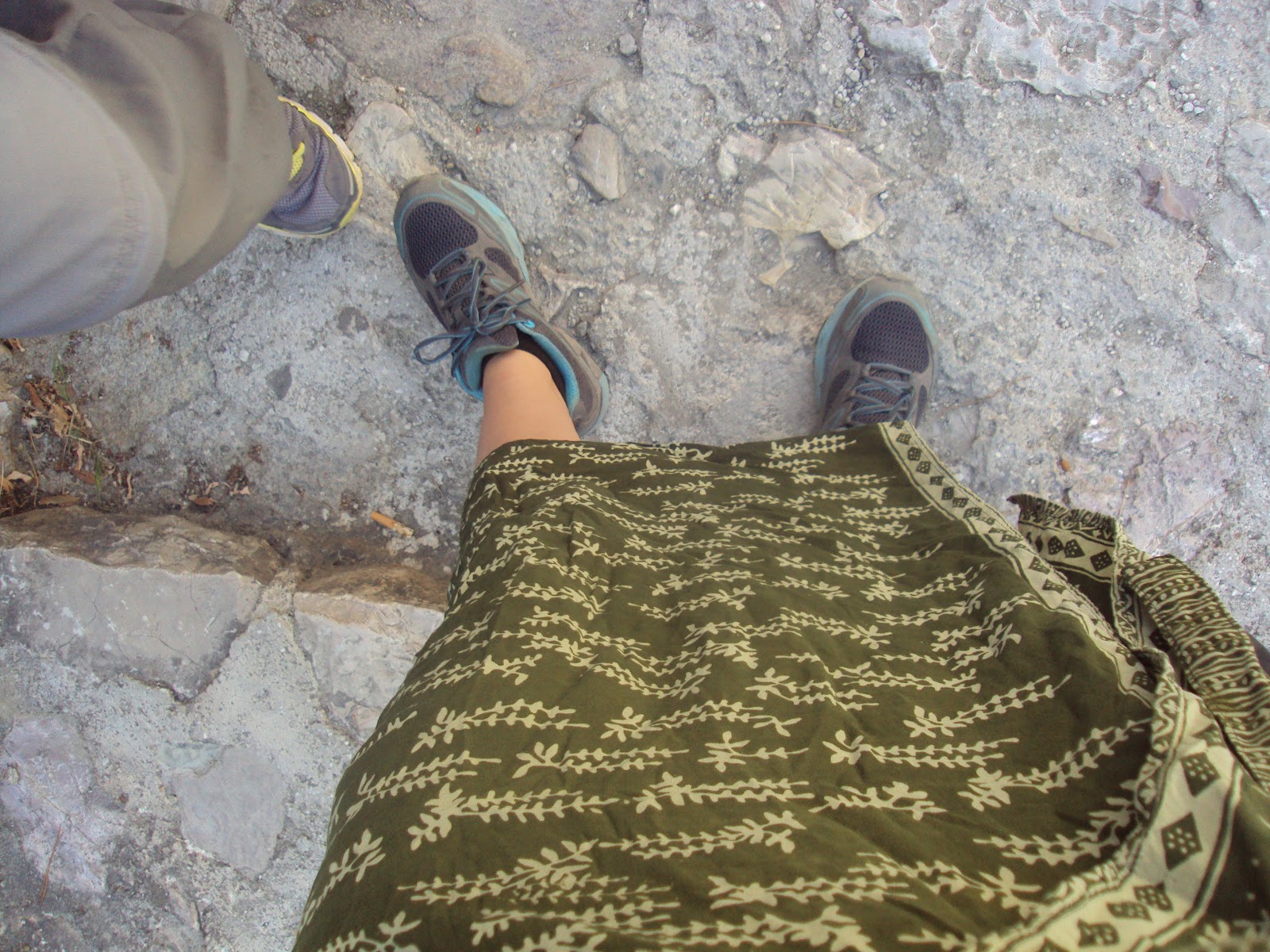
We had to cover up! Ladies are not even allowed to wear pants to cover their legs, they must wear skirts.

Yay for sacred spaces!

Litochoro in Photos

Tags

,

The edge of sunset from our suite at the foot of Olympus

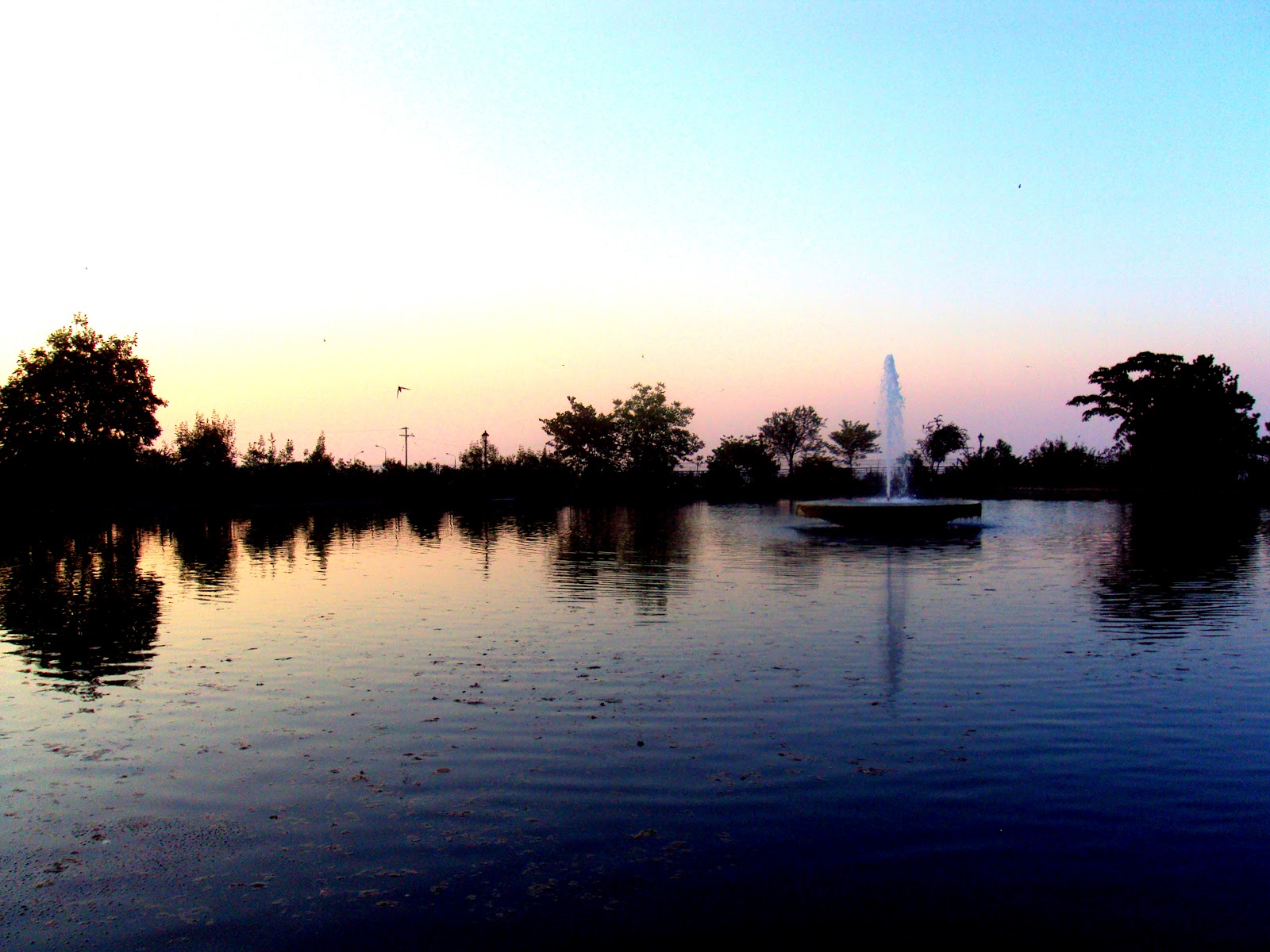
At the park in the middle of the town

A choir concert 

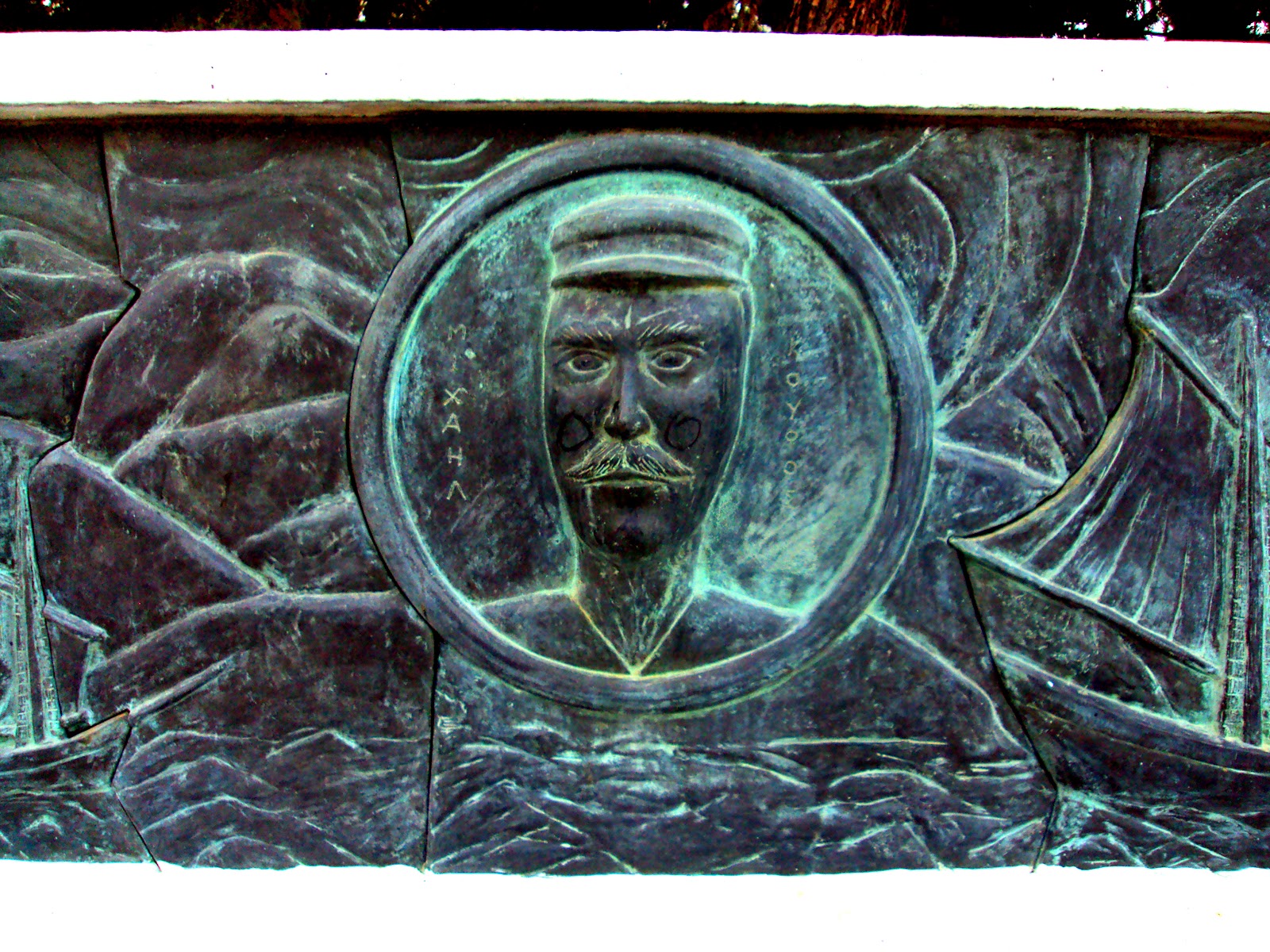
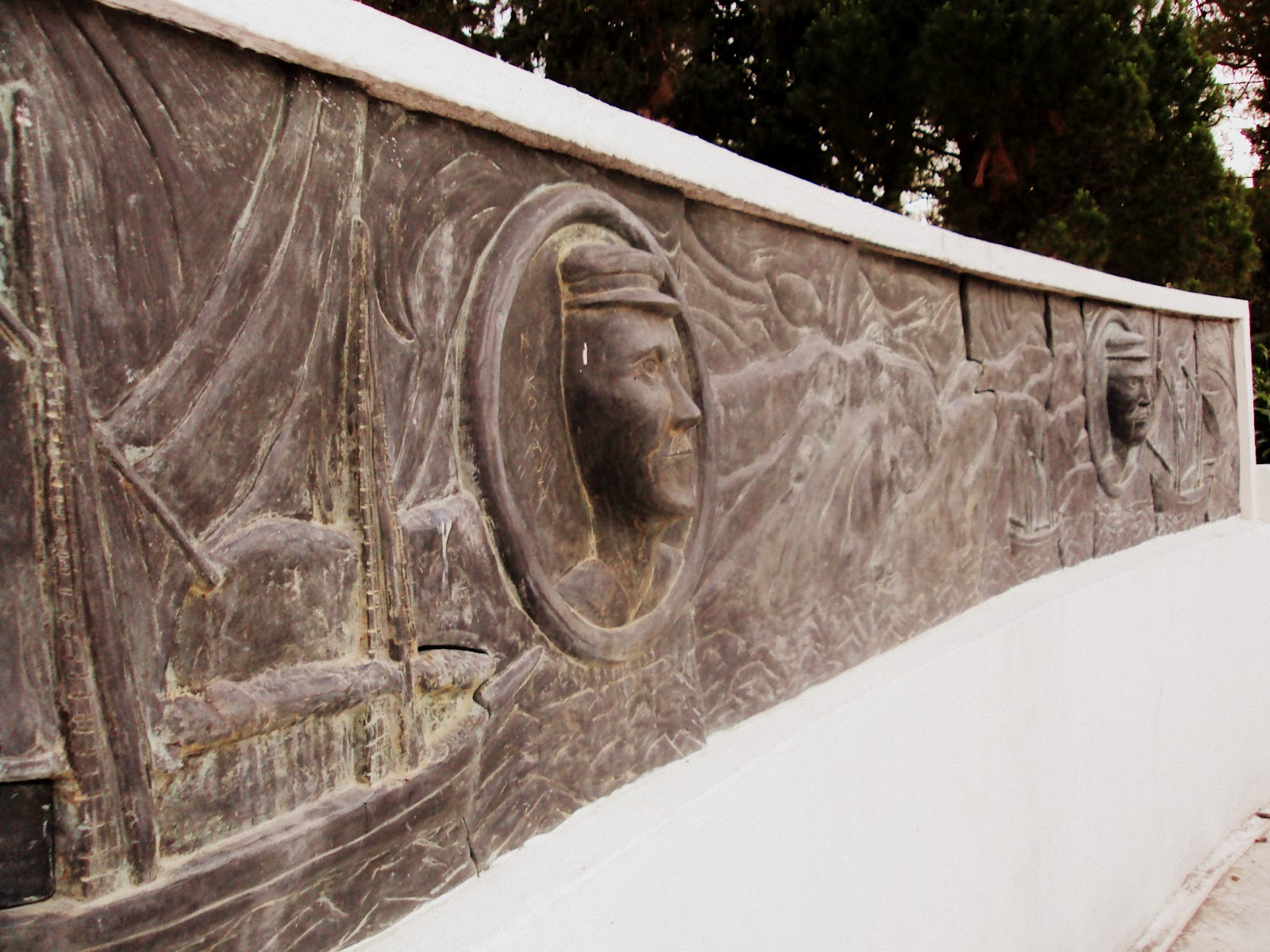
This was a war memorial 

This reads: Bishop Kitrous Nikolaos, the leader of the revolution of Olympus 1878 1840 1882

One of the many butterflies of Olympus. Boris took this shot.

Hiking on Mount Olympus

Tags

, , ,

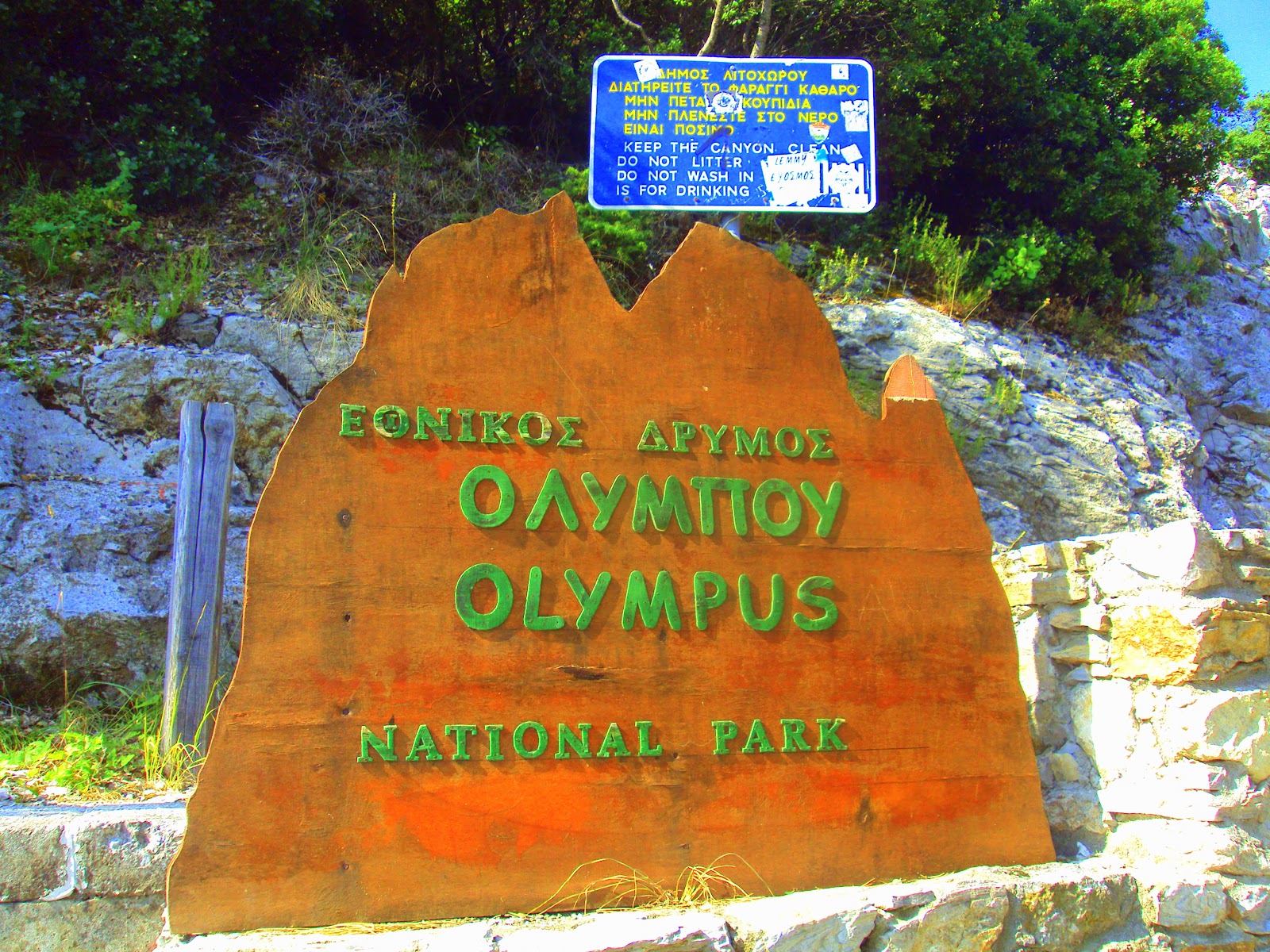
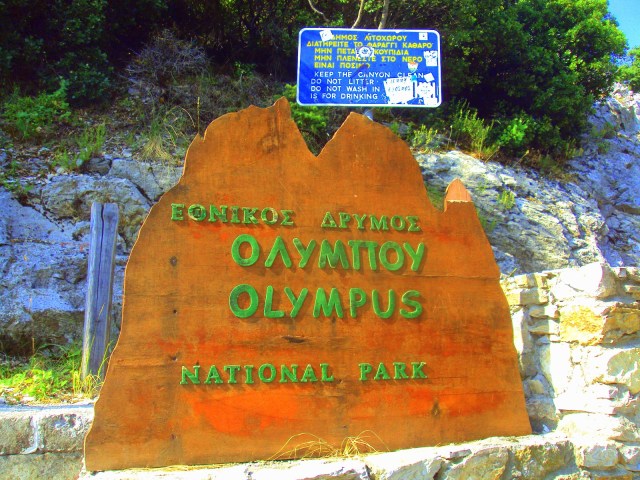
The entry to the park!

When Boris & I started planning our trip in Greece, we had this great idea: why not hike Mt. Olympus!? Yes! I thought, totally sure this would be excellent. After doing minimal research and reading a few Lonely Planet forums, I discovered that Mt. Olympus is a relatively doable hike because it’s not a technical climb. The very top summit, which is where far fewer travelers reach, is a Class 4 scramble, which basically just means you’ll use your hands to help you climb but you don’t really need climbing tools (when there’s not snow, at least).


I continued my research, and found a few personal accounts on blogs and the like. These brave souls had summited and lived to tell the tale, all of whom seemed to endorse the experience as being a strenuous but fun hike up a mountain. What I neglected to realize was the reality of where they started their trip.

You see, there are a number of ways to arrive at the top of Mt. Olympus. Seemingly the most popular is to start at the trailhead in Prionia and hike the 2.5-3 hours to Refuge A, spend the night there in the mountain, and summit the following day. Cool, right? So, we made reservations for a hotel in Litochoro, the town at the foot of Mt. Olympus, for one night, with the intention of hiking to Refuge A from there and summiting the next day.

The catch: Prionia is halfway up the mountain. This was a detail I kind of neglected, forgot about, whatever. I was just so excited that we were hiking Mt. Olympus! As a student (and teacher) of the classics, and a lifelong lover of Greek mythology, the idea of hanging out where Zeus supposedly lived was an exciting one.

Fast forward to Sunday, when we arrived in Litochoro. After a long conversation with our extremely helpful hotel manager, we garnered the following information:
1.       It was going to be about 100 on the day we decided to hike.
2.       Prionia is a four to five hour hike from Litochoro.
3.       From Prionia to Refuge A, it’s about another 2.5-3 hours (Keep in mind that this would have been after very strenuous uphill climbing for five hours).

Truth be told, I was concerned after this discussion. If we were willing to taxi up to Prionia, it would have been no problem, but summiting from half-way up the mountain? We wanted to do the whole shebang.

So, we adapted, as travel tends to require. We discovered that our (incredible) hotel had availability for the following night, and decided we would take the trek from Litochoro—the path started just up the street from our hotel—to wherever we could get; Prionia was a goal, or a monastery right below it. We were warned about the heat, and had to accept the realistic parameters of the climb to be safe.

Since we had less of a concrete goal, we got a late start; breakfast at 8, finally made it to the trail head with enough water and some snacks around 9:45. The first hour was BRUTAL. Honestly, I’m not a huge hiker. I like to hike. I go on hikes once every couple months, probably. I’m in pretty good shape. But never in my life have I strapped a pack on my back and made it up huge mountains or bushwhacked through the wilderness. I leave that to my more daring and outdoorsy friends, of which I have many. But that was why Olympus was appealing to me, in part: I could do it.

 In that first hour, though, where the elevation rises so rapidly, and all you’re seeing is stairs and switchbacks and feeling your heart racing and the mid-morning heat is rising, you can get pretty discouraged. And so we were after the first hour. Our pace was slow, mostly because I was keeping it that way. We had been told that water from the river was potable, so we only brought a couple big liters of water and had already made it through one with no clue as to when the river would cross with the path. Luckily, we ran into some Greek trailrunners, who reassured us that we were only about 20 minutes away from the first river connection.
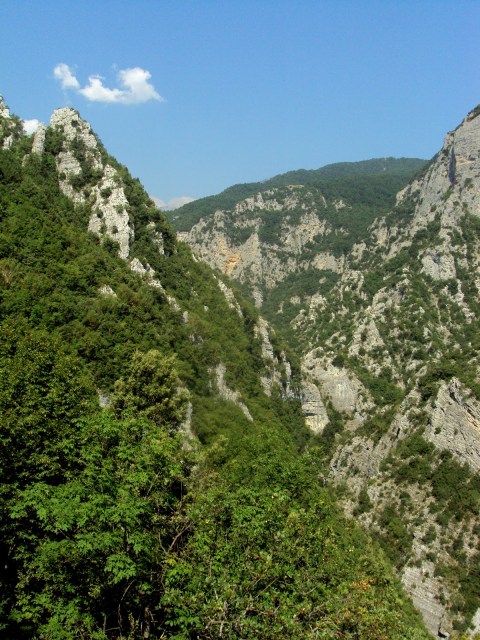
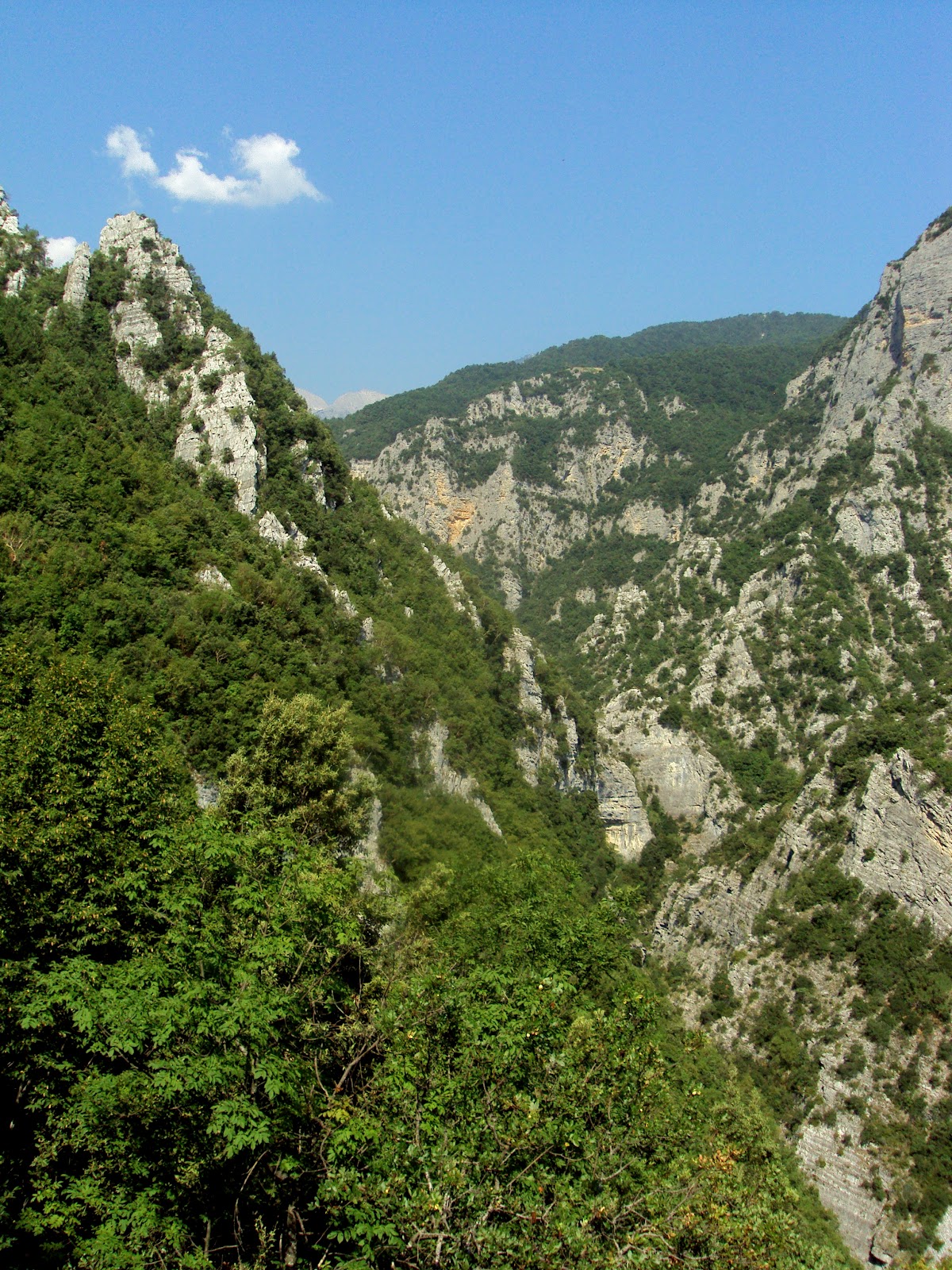
One of the first big views

Sweet rocks
Another pretty stunning view

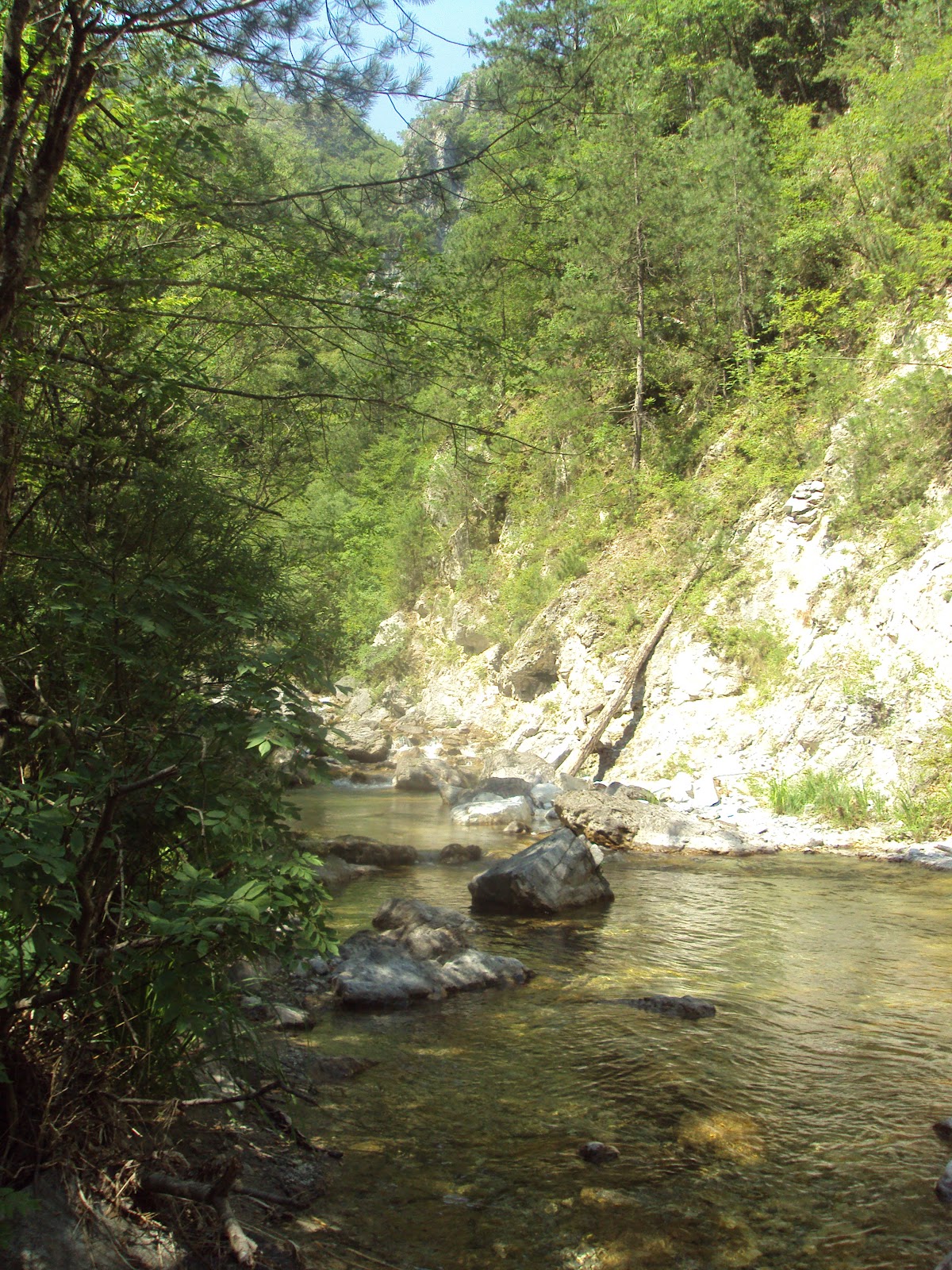
The water was completely rejuvenating. Crystal clear and icy, it ran along the trail for a while and we took a little dip. Refreshed, with full bottles of water, we continued on our way.
The waters of Olympus
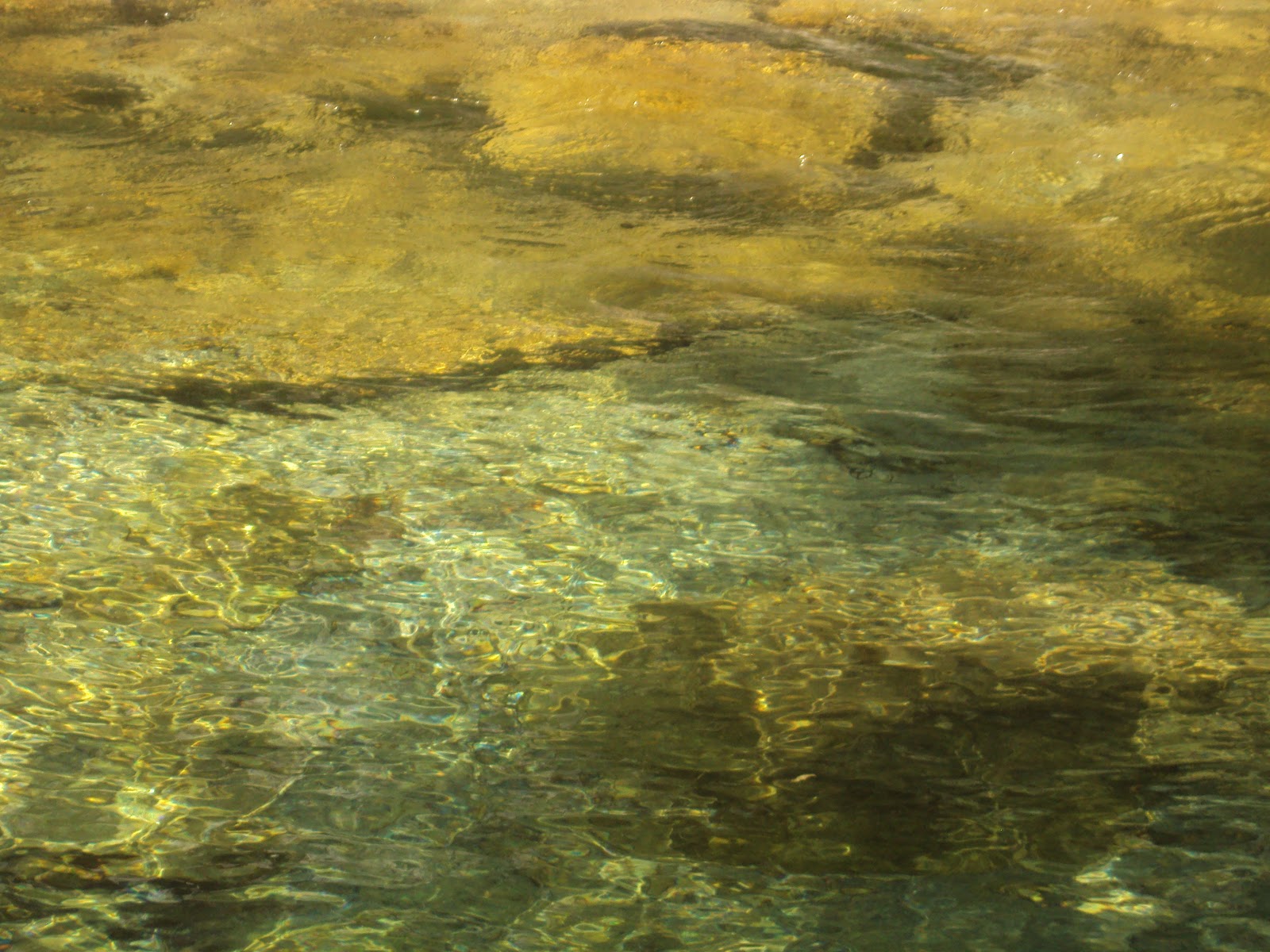
See how clear it is! Potable, clear mountain spring water.


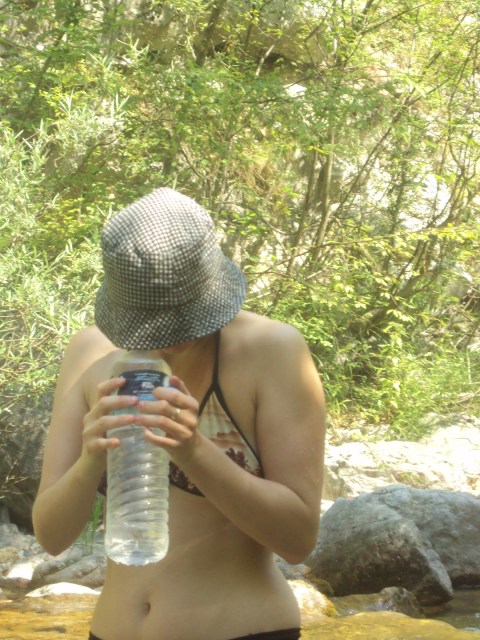
Obviously I was a little skeptical about the potable part, despite numerous locals all telling us it was the exact water we drank from the tap in the town. I’m looking into the bottle here to make sure I can’t see any germs (as if I’d be able to, anyway!)

Due to the heat, we tried to take things slow. At first I had been really upset when we decided it would probably be safer and more comfortable not to summit, but my boyfriend was right: it felt a lot different once I was on the mountain. The views were spectacular. Luscious trees filling up the canyon opened onto Litochoro on one side, on the other were the peaks of Olympus, daring us to conquer them.
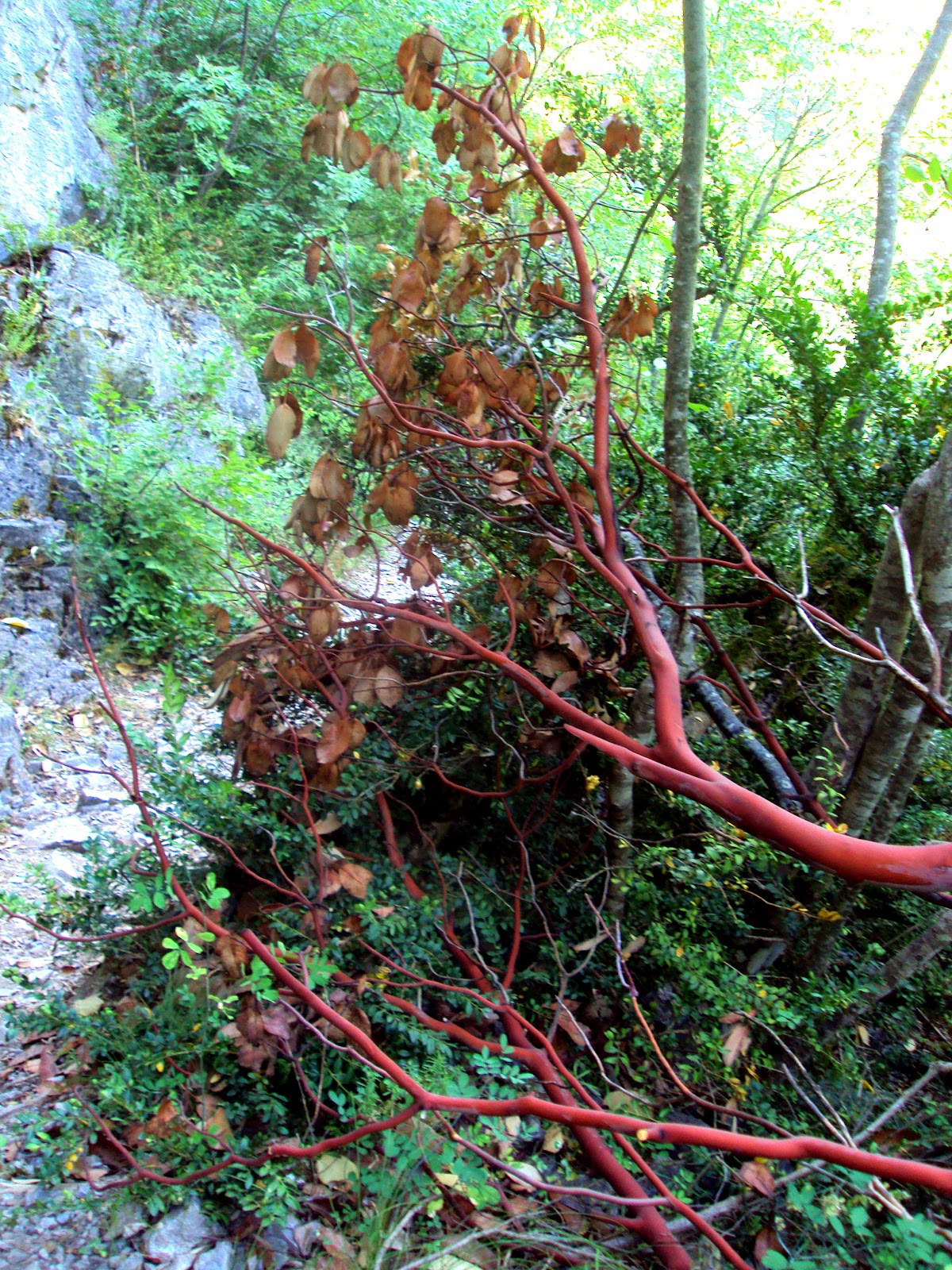
I’d love to know what species of tree this is. We saw a number of fallen red ones exactly like this. At first we thought it was spray-painted, that was how red it was!
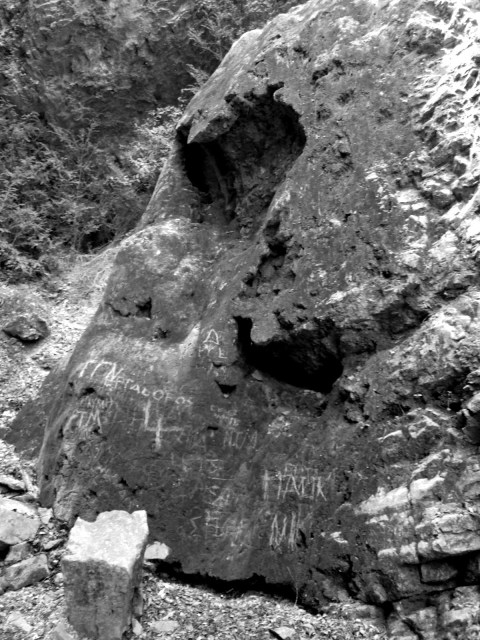
History chronicled in the names of the hikers.
Wildlife! There were SO many butterflies all over the place!

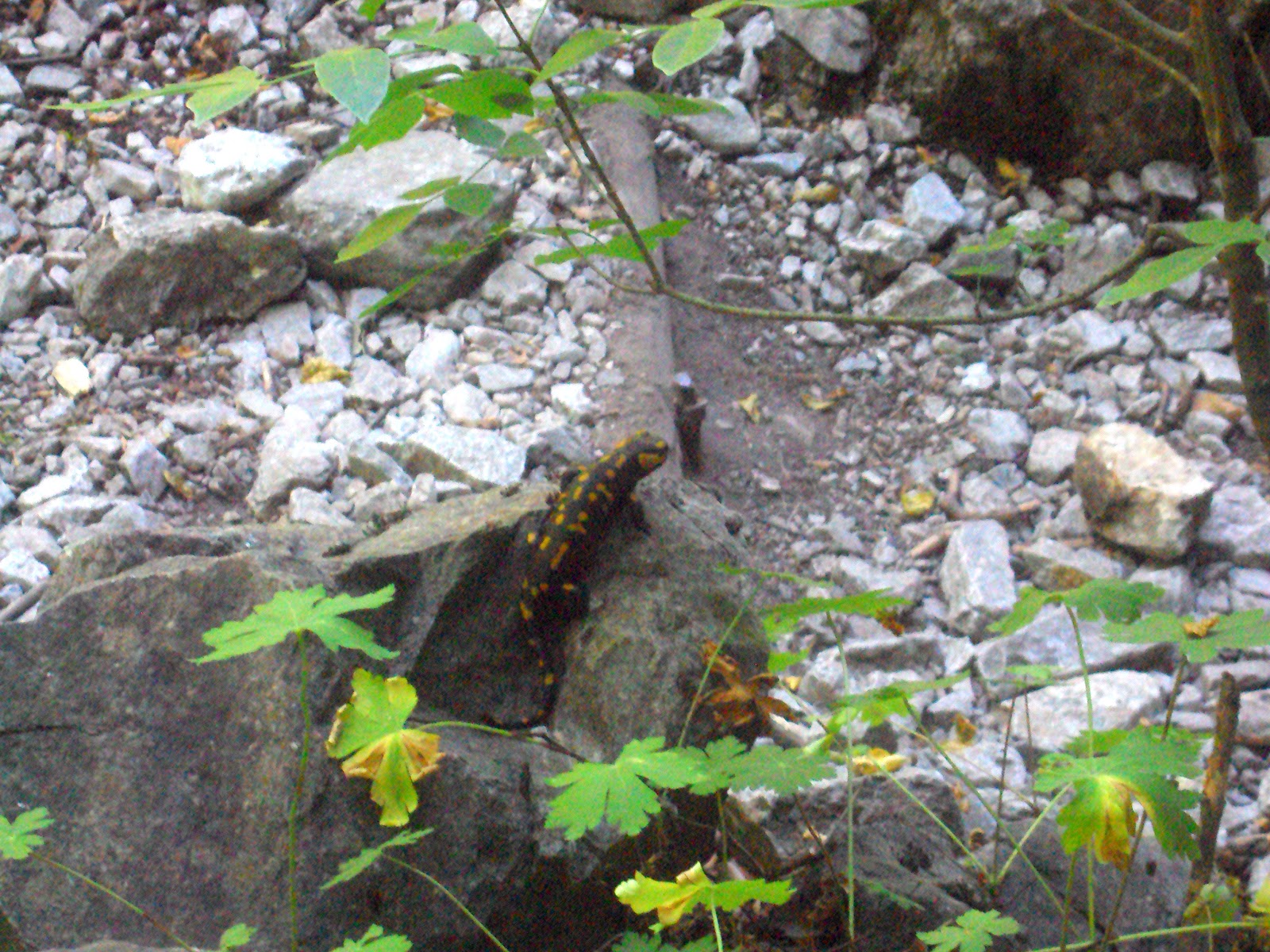
More wildlife! This gecko surprised us with its a) presence and b) vibrant colors!
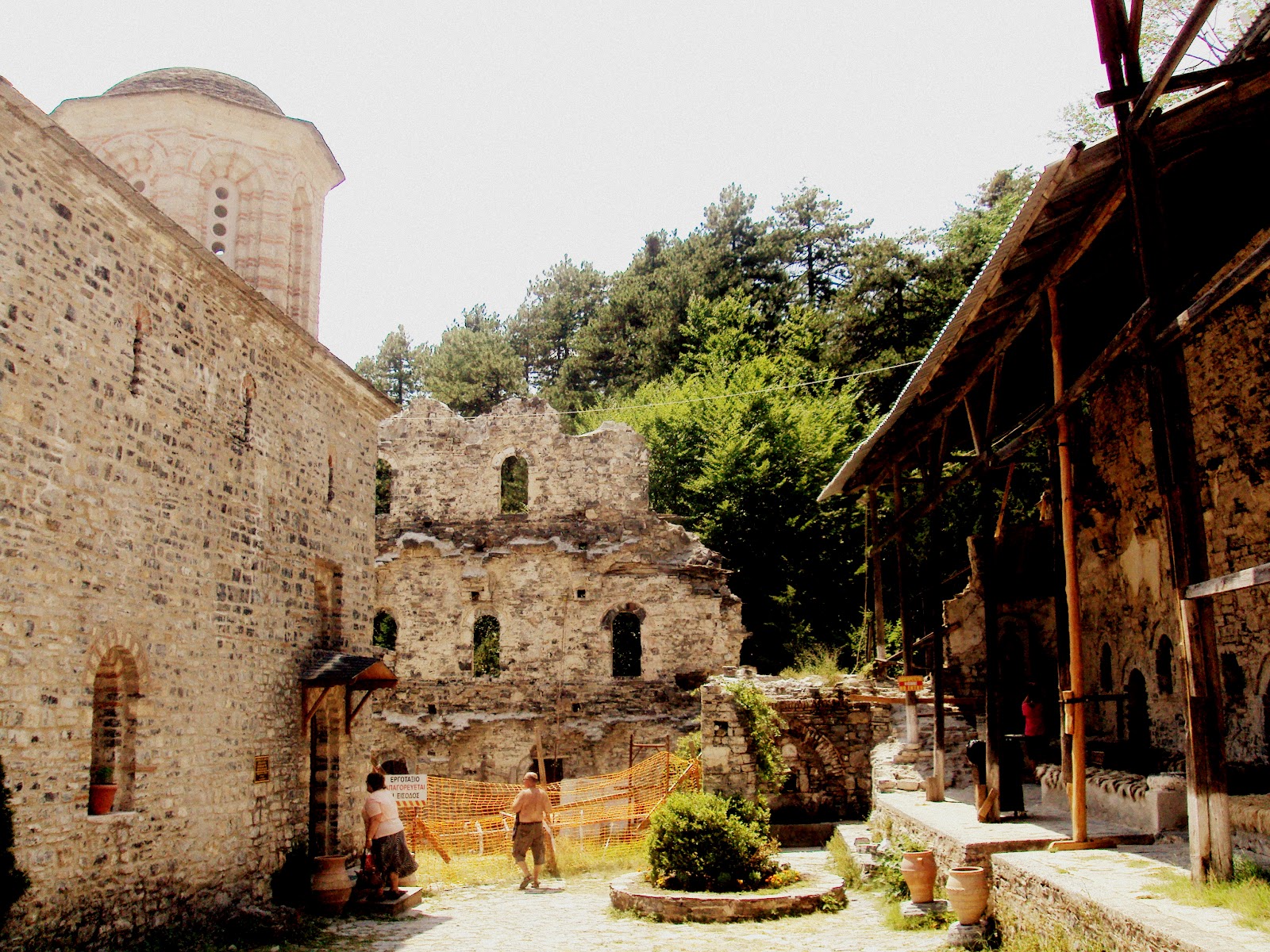
After about 5 hours of hiking, including breaks, we made it up to a monastery that had been destroyed in World War II, completely bombed by the Germans in 1943. Now it is being rebuilt, slowly but surely. The outer buildings are still ruins, ruined enough that someone who hadn’t read the signage would assume it had just been left to rot for some reason or another. But once you enter the inner courtyard, you will find something else.
A small structure where holy water runs, about a 30 minute walk from the monastery.
We found a number of other tourists who had driven up from Litochoro or down from Prionia (only about another hour on foot), workmen laboring over the renovations, and a quiet, young monk clad all in black who offered us the best Turkish delight I’ve ever tasted. He brought out the bowl of sweets and offered it to everyone sitting there before asking us where we were from. The family sitting by us, what looked to be a grandmother, perhaps two adult daughters, a husband, a grand-daughter, also shared their food with us. Our stash of raisins and walnuts essentially depleted, we accepted their generous offerings of fresh cucumber, apricots and bread without much protest and with many thanks.
The inner part of the monastery of Agios Dyonisios. To the right was where we were welcomed and fed.

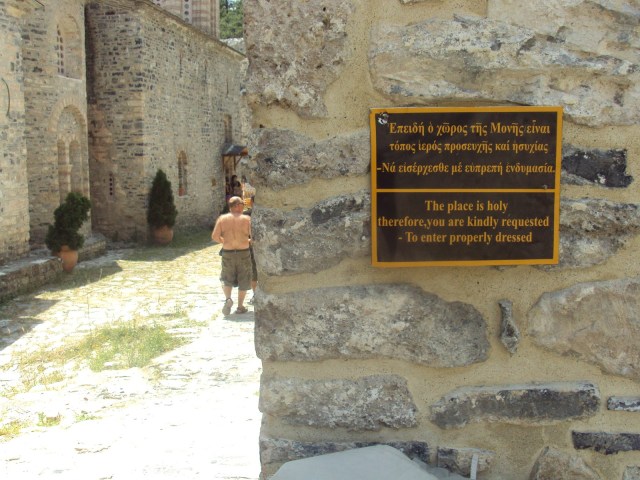
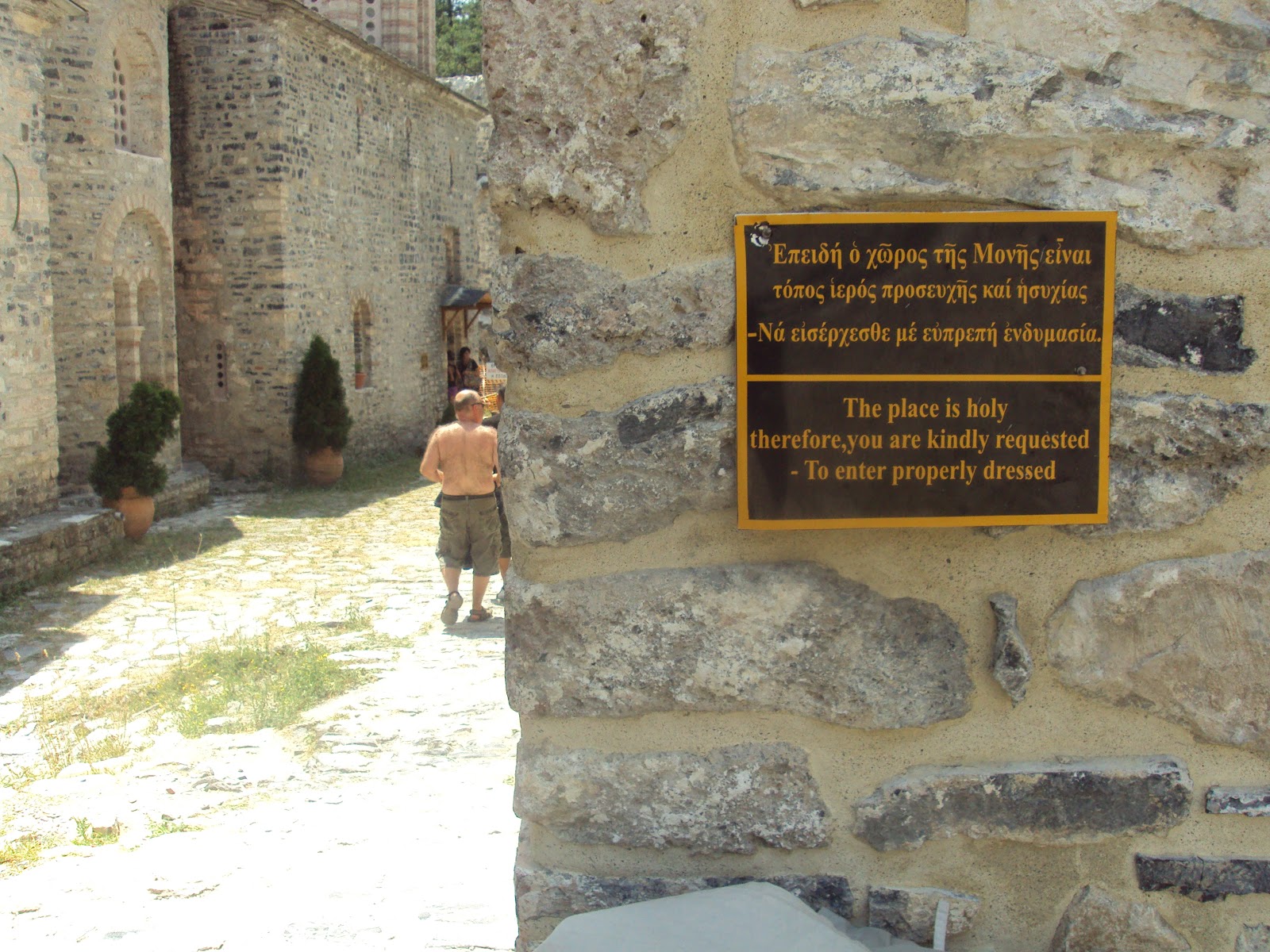
Funny shot of the day: the sign requests for people to enter properly dressed, as the area is sacred. Notice the half-naked man on the left entering said sacred space. 
As we rested for those thirty minutes, we considered our strength, and the circumstances of our ascent. Had we needed to continue on to Prionia, rest there, and then hike another few hours to Refuge A, we could have. It would have been difficult, we would have arrived late, but we could have done it, and summited the following day. Knowing that makes me feel a little bit better, I suppose: that we could have. We will someday, maybe after training a bit more and being more organized. We’d need to leave much earlier and pack better. And we probably wouldn’t want to hike it in July—with temperatures reaching 100 degrees, and the tree line disappearing as one reaches the summit, any hiker would face the dangers of heat exhaustion or heat stroke, neither of which is safe. May and September are the recommended months for such a climb.

Our return to Litochoro took about three hours, and ultimately we hiked about 10 miles up and down from Litochoro to the monastery of Agios Dionysios. By the end, we were both beat; steep uphill and downhill walking is tough on a lot of different muscles and joints, and as we reached the entry to the park, we were both glad we had finished. We rewarded our hard efforts with a celebratory dinner and a relaxing evening in.
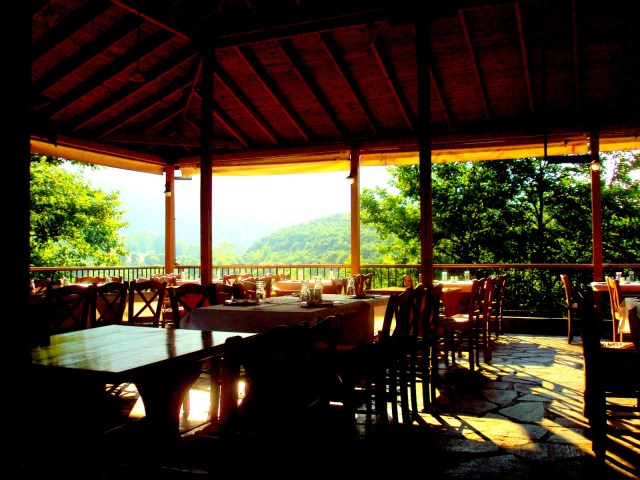
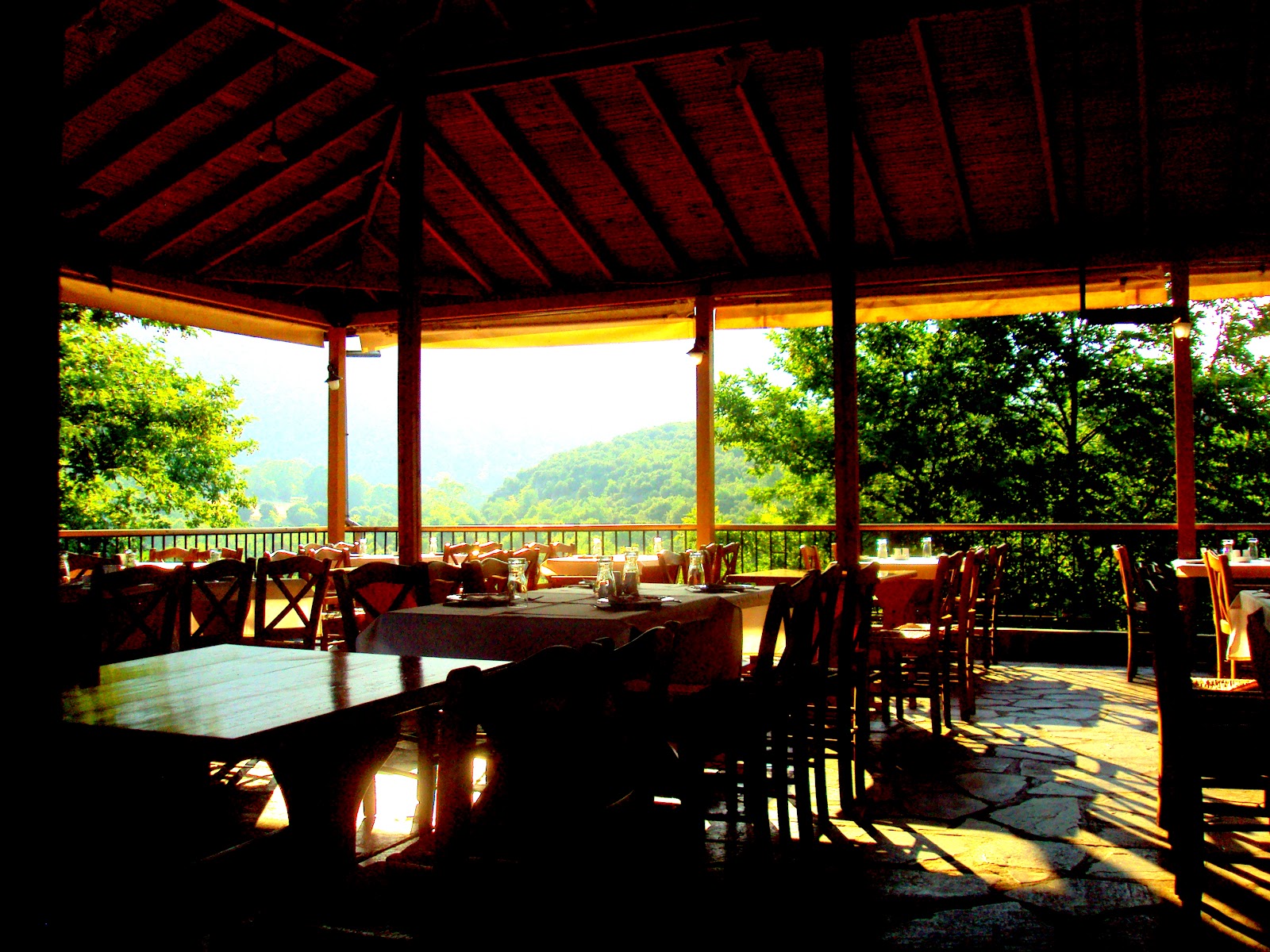
We ate dinner at like 7 p.m. which is very early for Greeks, so we were two of five people eating.

My Favorite Five:Things to Do in Thessaloniki

Tags

, , ,

My travels in Greece last summer opened my eyes to a level of beauty I thought only existed in Photoshopped postcards. Nay, Greece had cried to me as I sat and watched the sun set from the rocks off Hydra, I’m beautiful. For reals. And so far, it really has proven to be true.

Sure, Greece has its issues, perhaps now more than ever. But politics and economy aside, there’s a reason why this country was the birthplace of much philosophy, or Western art, and of all the things that so many other civilizations appropriated or were influenced by. Part of that is its inherent beauty and the vitality of its people.

Thessaloniki, the capital of Greek’s region of Central Macedonia, is, at its heart, a diverse city. Historically speaking, Thessaloniki–aka Salonica–was home to large populations of Jews, Turks, Bulgarians, as well as native Greeks. Today, it’s considered the cultural capital of Greece.

Having never explored northern Greece, the six-and-a-half hour train ride up from Athens was a pleasant journey; the scenery changed from arid to green in less than an hour, and by the time we arrived in the early evening, the city was hot but tempered by the breeze at the port.

We only spent a couple days in Salonica, but they were great days. Here are my favorite five things we saw and did there:

1-3: Thessaloniki On the Go Bus Tour: A bus tour constitutes three out of five? Really? Yes, really. Our hotel (which, by the way, was a FANTASTIC family-run place, I highly recommend you check out Hotel Atlantis if you’re ever traveling in Salonica, very helpful staff and comfortable accommodations for excellent prices) gave us this tip to try out the Thessaloniki On the Go Bus Tour. It’s just a regular hop on/hop off sort of deal, but it only cost 2 euro. The comparable one that met right next to it had the cheapest price of 9 euro. 

 We got to see the major parts of the city, and while in transit enjoy the lovely air-conditioned atmosphere of the bus, which was welcome considering how hot Greece can be. Taking this #50 bus, we hopped off in the neighborhood of Ano Poli, the old town and a part of Thessaloniki that was not destroyed during the city’s great fire in 1917. Vlatodon Monastery (1) was a peaceful place to see the city from afar, and still functions as a Byzantine monastery, so you can go to a service if you’d like. 
Just through the first arch into the old town is the Heptapyrgion (2), which was a fortress built in the Byzantine era. This would probably be a good place to watch the sun set over the city, but a wedding party was there getting photographed so we didn’t stay long. Here’s the view! 
Me at the fortress overlooking the city. Not a bad view, eh?

I like taking pictures of grapes. 

The cemetery at the monastery.

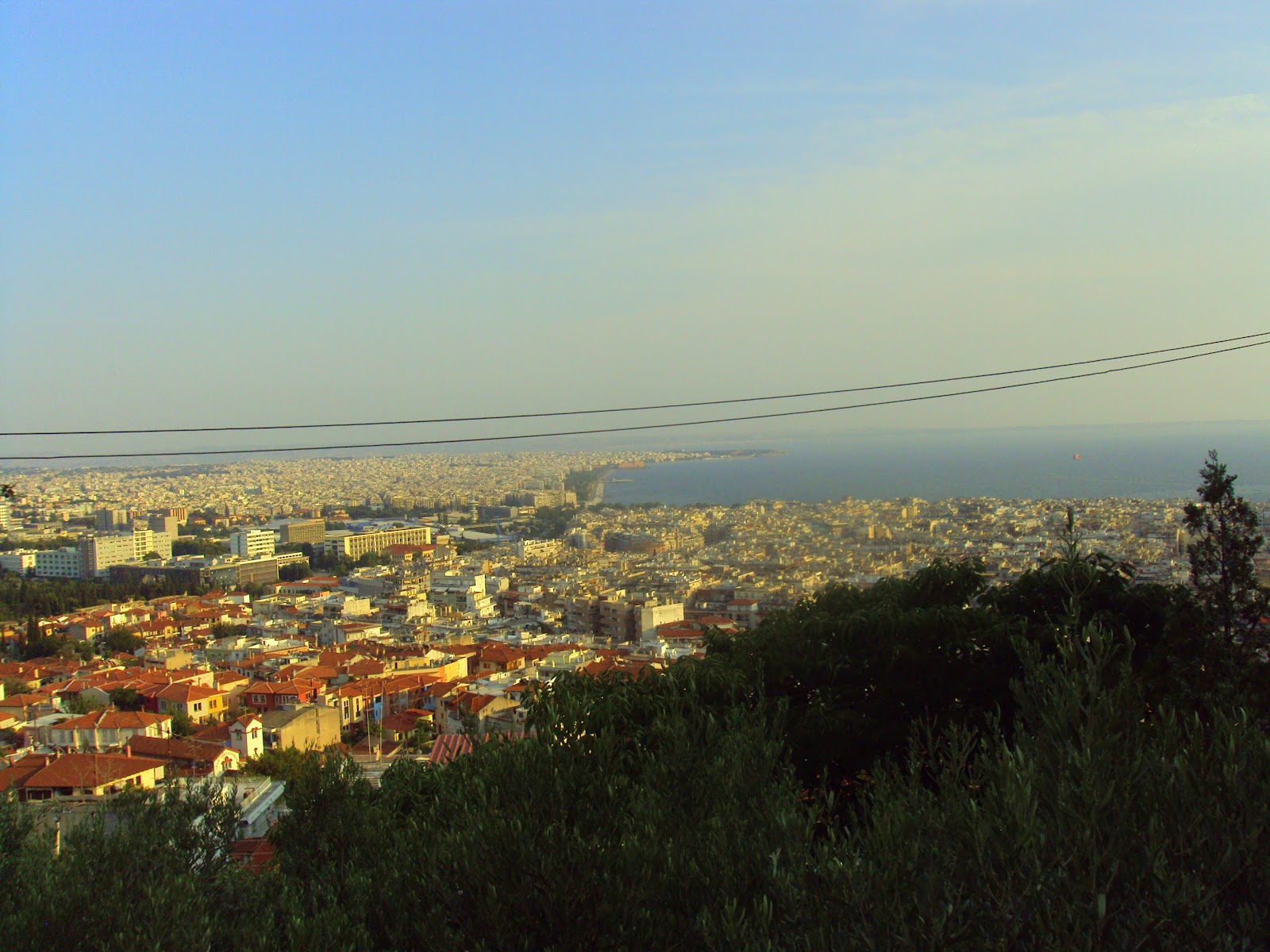
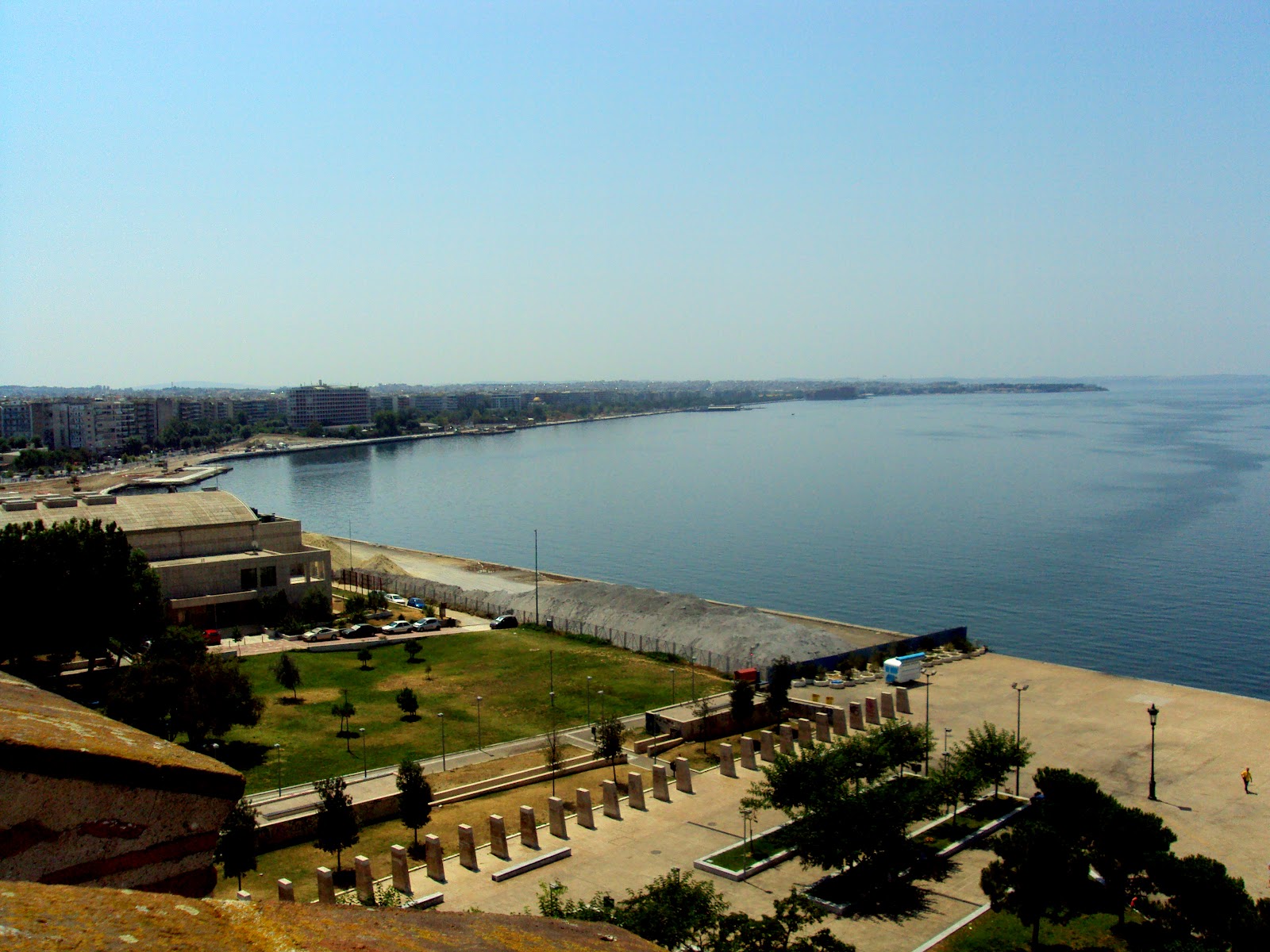
View from the monastery overlooking Salonica

A back street in Ano Poli
Travel secret: To get off the beaten path in practically any city, buy some snacks (fruit is our recommendation), find a residential area and a square or park, and people-watch while devouring your goodies (3). This is what we did in Ano Poli; we explored the neighborhood, which got us away from the generally touristed areas of the city. We found a little grocery store and bought some fruit, which is absolutely perfect in Greece, and watched families finishing their coffees in the plaza by our bus stop. A little slice of what life is really like for Salonicans. 

4. Dining in Ladadika: The area by the city center is broken into a number of districts. Many trendy tavernas and clubs are located in Ladadika, and we found a brand-new restaurant, Basilikos, that we loved enough to eat at twice. Nightlife in Thessaloniki thrives, and Ladadika seems to be where everyone starts their night, with dinner or a few drinks, and then maybe heads out to the clubs.

5. Down by the port: Waterfronts are generally a safe bet for things to see and do in a city, and Thessaloniki is no exception. Sunset by the water is not a sight to be missed, and there is plenty of seating available in public areas. If you want to dine or drink in style, there are also a few nice places right on the water, which affords a choice view of the city or of the Aegean Sea. For historical and cultural information on Thessaloniki, as well as a cool view, check out the White Tower. The audio guide is included in the price, and although it wasn’t necessarily my absolute favorite activity we did, it was the closest we got to a museum, so I learned a bit about the town by going.

From the White Tower

Sunset at the port

Street musicians in Aristotelous Square

Ever been to Thessaloniki? What was your favorite part?

Geia sas!

Tags

, ,

Phoenix–>Washington, DC–>Munich–>Athens=about 24 hours of travel on approximately 4 hours of sleep. But, we made it! 

The last time I was in Athens was last summer, and I can’t say I immediately fell in love with the city. Protests had only recently calmed down, and although I was still looking forward to traveling in Greece this year, I won’t say I wasn’t concerned about the political and economic climate. 
Thessaloniki by night. Photo courtesy of Kairos-Holidays.com
However, our arrival in Athens was smooth; no violence in the streets, no protesters camping out in squares greeted us as we emerged from the metro. We ate dinner at a taverna near the hotel in the neighborhood of Psiri, a hip area where young people hang out to drink, smoke hookah and enjoy the arid Athenian summer air. Three kittens played by our table–a black one and two orange tabbies–and we feasted on our first legitimate Horiatiki salad in a year. Fresh olives, tomatoes, cucumber and onion topped with a thick slab of feta. 
The next morning was passed on a quest to find Boris a watch battery, during which we went through Monastiraki, an area where the Greeks do their shopping. A huge meat market was on our way, and we decided just to walk through to look at the wares. Flanks of every meat-producing mammal humans eat seemed to hang from the stalls, and goats heads peered out at us from icy buckets. Some butchers shouted the details for their meat products, others just greeted us with a friendly, “Kalimera.” (Good morning) All wore white coats smattered with blood. 
After a six-hour train ride north, we made it to Thessaloniki, aka Salonica, the second-largest city in Greece. Our budget hotel is located right on one of the main streets, and is staffed by some of the friendliest hotel-workers I’ve ever encountered. 
We wandered Ladadika and found a little mezedopoleion, a type of restaurant sort of specializing in appetizers, barely a week old. A small feast of traditional Greek salad, oven-roasted potatoes slathered in goat butter and melted gruyere, and spiced sausage & cheese inside perfectly crisp filo rolls. So good and SO CHEAP! We paid less than 15 euro for the entire meal, plus they brought us dessert, bread, and an aperitif called Raki with some sort of tasty bruschetta-type bread with a paste that was really good, too. Sorry I don’t remember the name, I was eating it. 🙂 
Sated by our meal, we walked back to the hotel the long way, admiring the open squares and people relaxing in the bars and restaurants, all with open seating along the plazas. So far, Thessaloniki has made an excellent impression! I hope it continues to please!

Words for Safe Passage

Tags

Courtesy of Moon Travel

When I was in 6th grade, my seat in science class faced a big poster with a prayer on it written by Sir Francis Drake in 1577 before his departure to the Americas. The font was fancy and old-looking, like an illuminated manuscript. The first letter of the prayer loomed over the rest in that antique book style, and whenever I zoned out, I would read and re-read that prayer hanging on the wall. For years I had the first stanza memorized; its poetic vehemence struck me, even the 11-year-old me.

Later I would find that my parents also liked this prayer, and hung it on our refrigerator among the dozens of school portraits, magnets, postcards from globetrotting family and friends. At a certain point, the printout disappeared, probably in a cleaning frenzy that, once in awhile, would leave the fridge looking more spartan than it had in years.

Now, as I sally forth into this great, big, daunting world, I am moved–just as I was sitting in that sixth grade science class–by the first words.

Disturb us, Lord, when we are too well pleased with ourselves,
When our dreams have come true because we have dreamed too little,
When we arrived safely because we sailed too close to the shore.
What a plea! For whatever power that be to disturb us. I don’t think it matters what beliefs you hold, or whether you hold any at all about the divine. But I think this idea is an important one; we should be moved to act once in awhile, rather than being left alone in our own complacence, or our own ambivalence for happiness to be realized. 
I looked up the prayer recently for my own sake. Here it is in full; I’ve highlighted my favorite parts.

Disturb us, Lord, when we are too well pleased with ourselves,

When our dreams have come true because we have dreamed too little,


When we arrived safely because we sailed too close to the shore. 

Disturb us, Lord, when with the abundance of things we possess

We have lost our thirst for the waters of life;
Having fallen in love with life, we have ceased to dream of eternity
And in our efforts to build a new earth,
We have allowed our vision of the new Heaven to dim.

Disturb us, Lord, to dare more boldly, to venture on wider seas

Where storms will show your mastery;

Where losing sight of land, we shall find the stars.

We ask You to push back the horizons of our hopes;
And to push into the future in strength, courage, hope and love.


Since rediscovering this prayer, I’ve found many others from lots of different religions. Travel has always been a part of life, both ancient and modern, and the historian in me is very interested in how similar they all are throughout time and across culture.


 Anyway, here’s to daring more boldly, venturing on wider seas, and finding stars! 

Independence Day

Tags

The 4th of July is a special holiday to me. I’ve written about it before, about our neighborhood block party growing up, the reading of the Declaration, the fireworks that inevitably set fire to Sentinel Peak every year in Tucson (sometimes we learn a bit slowly in AZ). 

I’ve spent the Fourth at home. I’ve spent it abroad. I’ve spent it with family, with friends, with new friends, with strangers. Today, I’ll be spending it en route to Athens, Greece, so I’ll be able to say I’ve celebrated our Independence Day on the ground and in the air. 
This time, too, it means something different. Independence today means independence that I’ve chosen. My big leap, the one that I’ve been preparing for for months, this decision that I made on a warm day in the Tucson spring, it’s actually happening. I’m not just abstractly talking about my flights, or my packing list, or my travel gadgets. I’m concretely talking about my flights (1 down, 2 to go for this leg), my packing list (made it with my Osprey Meridian carry-on), and my travel gadgets (Chico bag that folds into itself! Kindle! Mini flashlight! And all the cool stuff I’ll get to borrow from Boris!). 
My own independence day is today. Time to rip it up like Jimi Hendrix did. 

My Favorite Five: Places to Eat in Sonoma County, CA

Tags

, , ,

Northern California is a great place for foodies. Wine country at your fingertips generally means great food to go along with it, and eat well we did! Here are a few places where we got some sweet eats. Check them out if you’re in the area!
This little market has been written up as an up-and-coming eaterie in Food & Wine, and it’s no surprise why. Head in to find a variety of creative and well-crafted sandwiches, homemade biscuits with honey, a great drink section and more! Plus, they’ll pair your sandwich with a wine they carry. Don’t forget to check out their specials, which feature locals! (I had the Ziggy last week, which featured a wine-marinated pulled pork that was out of this world.) How’s that for community building?

Howard Station Café, Occidental, CA
Good advice from Miss Piggy on the wall of Howard Station Cafe! 
Howard Station had been recommended to my mom, and I’m glad it was. We ate there one day for breakfast, and then went all the way back to Occidental for round 2 the very next morning! The laid-back atmosphere and friendly service couple well with the diet-friendly menu: looking for vegan? No problem! Gluten an issue? Fuggedaboutit! Known for their eggs benedict, they’ll serve it up not just traditionally (which they’ll still do), but the cooks at Howard’s get creative. When we were there, they served an Irish eggs benedict, with corned beef, which got great reviews at our table. The waffles are, in a word, perfect: light, fluffy, with a big dollop of homemade whipped cream and fresh fruit. They can be gluten-free, too, and you’d never know the difference!
Best gluten-free waffles!
We discovered this new venture on a quest to eat at its big sister restaurant, Scopa. Campo Fina, just around the corner, serves family style Italian antipasti and small dishes, as well as some darn good desserts. Play bocce in the back while you wait for your food, or just enjoy some of the locally grown wines! Keep in mind that it is on the pricier side—the small dishes are delectable, but they don’t go very far, so be prepared to order a lot of them to feed a hungry party. It would be a perfect date place!
Along the highway, seemingly in the middle of nowhere, is a beautiful garden next to a bakery whose name plays with words and whimsy alike. Wildflour Bakery serves up hot bread of many flavors, and the garden that flanks it is full of flower and vegetables. Don’t forget to look for the cool elephant mural when you pay!

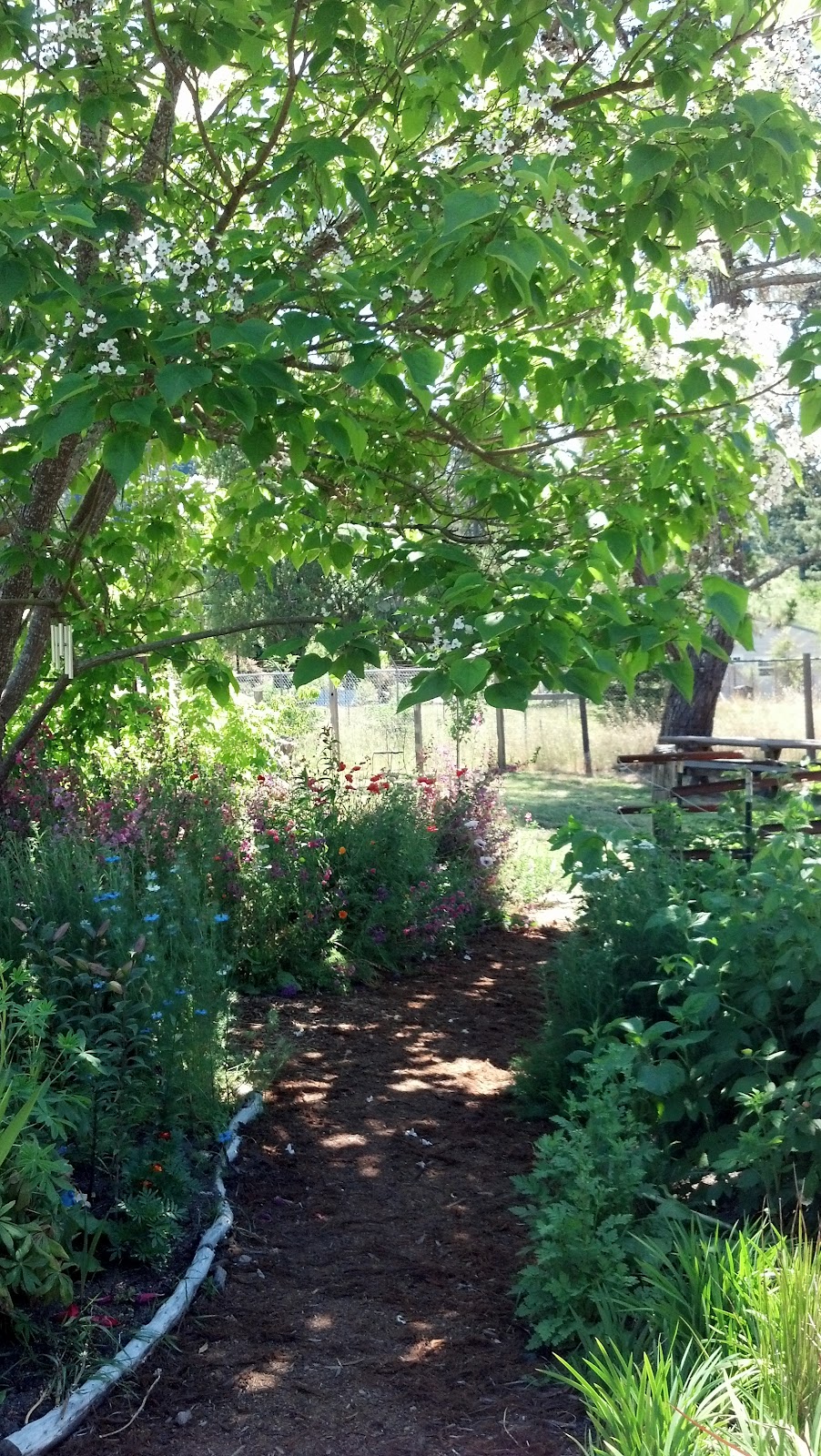
Wildflour gardens

Wildflour gardens

In the Wildflour gardens

Elephant mural in the bakery
There’s no place like Home.
A home-cooked meal is often the best way to cure homesickness, to learn a family recipe from a grandparent, or to have a relaxing meal on your own terms. We ate some great meals in the surrounding restaurants, but I come from a family of talented cooks, so I get spoiled at family meals, too. Fresh, local rockfish grilled by my dad (who taught me almost everything I know about cooking), my grandpa’s famous cream cheese scrambled eggs and more all were passed around the table to choruses of “Mmm”s. That is one thing that I will miss the most during my upcoming travels: sharing a meal with my family. Time to make some new friends and share the table with old ones, though!